













A retired Professor of Phytochemistry and Organic Chemistry at the University of Ibadan, Professor Olusegun Ekundayo, has called for increased investment in research, innovation and human capacity development to unlock Nigeria’s potential in the global essential oils industry.
Ekundayo, a foremost researcher in essential oils in Nigeria, made the call while delivering a plenary lecture titled, “Research, Innovation and Human Capacity Development for Advancing Nigeria’s Essential Oil Industry,” at the first National Symposium of the Society of Essential Oil Distillers and Analysts (SEODA).
He noted that essential oils, which have been used for thousands of years in healthcare, preservation, cosmetics, spirituality and commerce, now offer significant opportunities for industrial development as global demand for natural and environmentally friendly products continues to rise.
According to him, essential oils have applications across several sectors, including pharmaceuticals, cosmetics, food and beverages, agriculture and aromatherapy, while their antimicrobial, antioxidant, anti-inflammatory, analgesic and insecticidal properties further enhance their economic and scientific value.
The don stressed that developing Nigeria’s essential oils sector would require a multidisciplinary approach involving chemists, pharmacologists, microbiologists, agricultural scientists, food scientists and environmental scientists.
He also advocated the integration of indigenous knowledge with modern scientific research, saying scientific validation of traditional practices could preserve cultural heritage while creating new economic opportunities for local communities.
Ekundayo identified standardisation, quality assurance, safety, sustainability and inadequate research funding as some of the major challenges confronting the industry.
He explained that differences in plant species, cultivation methods, harvesting periods, extraction techniques and storage conditions could affect the quality and chemical composition of essential oils, making standardisation and quality control critical to the sector’s growth.
He therefore called for reliable analytical methods, comprehensive toxicological studies and clinical trials to establish the safety, efficacy, dosage and possible interactions of essential oil products.
The professor also warned against excessive dependence on wild harvesting, urging stakeholders to embrace sustainable cultivation, biodiversity conservation, responsible harvesting and environmentally friendly extraction technologies.
He said Nigeria was richly endowed with aromatic and medicinal plants such as lemongrass, eucalyptus, basil, ginger, clove, peppermint, scent leaf and citrus species, which could provide the raw materials needed to develop a competitive essential oils industry.
To maximise the opportunities, Ekundayo proposed the development of a National Essential Oils Development Policy to provide a coordinated framework for research, investment, production, regulation, quality assurance and export promotion.
He further recommended the establishment of a National Centre for Essential Oils Research and Innovation to coordinate multidisciplinary research, technology development, product formulation, pilot-scale processing, quality assurance and collaboration between universities, research institutes and industry.
The retired don also called for increased funding through competitive research grants, industry-led research, patent development, commercialisation of research outputs, pilot production facilities and technology transfer initiatives.
He urged government and other stakeholders to invest in specialised training covering aromatic plant cultivation, modern distillation technologies, analytical chemistry, quality assurance, product development, entrepreneurship and international marketing.
Ekundayo equally advocated affordable financing for farmers, processors, entrepreneurs and youth-led enterprises, as well as investment in modern distillation facilities, extraction laboratories, cosmetic manufacturing, pharmaceutical ingredient production, and fragrance and flavour industries.
He noted that emerging technologies, including artificial intelligence, metabolomics, biotechnology, nanotechnology, precision agriculture and advanced extraction techniques, could significantly transform essential oils research and production in Nigeria.
Earlier, the Chairperson of SEODA, Professor Sherifat Adeyinka Aboaba, said the symposium marked an important milestone in the Society’s efforts to position Nigeria as a major player in the global essential oils industry.
Aboaba disclosed that SEODA, established in 2019, had launched the first Compendium of Essential Oil Research in Nigeria, containing more than 400 abstracts from 20 contributors, as a resource for students, lecturers and industry practitioners.
She said Nigeria’s abundant aromatic and medicinal plant resources presented enormous opportunities for economic development, but lamented that the country’s participation in the global essential oils market remained relatively modest, with much of its biodiversity either underutilised or exported without significant value addition.
According to her, the symposium was designed to promote knowledge exchange, policy dialogue, networking and collaboration among stakeholders in the essential oils sector.
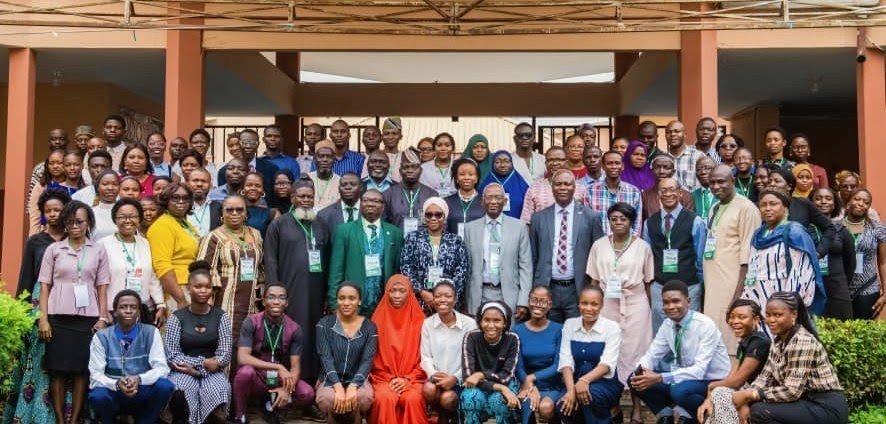
The symposium, themed “Unlocking the Essential Oils Value Chain in Nigeria: Production and Commercialization for Sustainable Economic Growth,” featured a keynote address, plenary lectures and parallel technical sessions.