














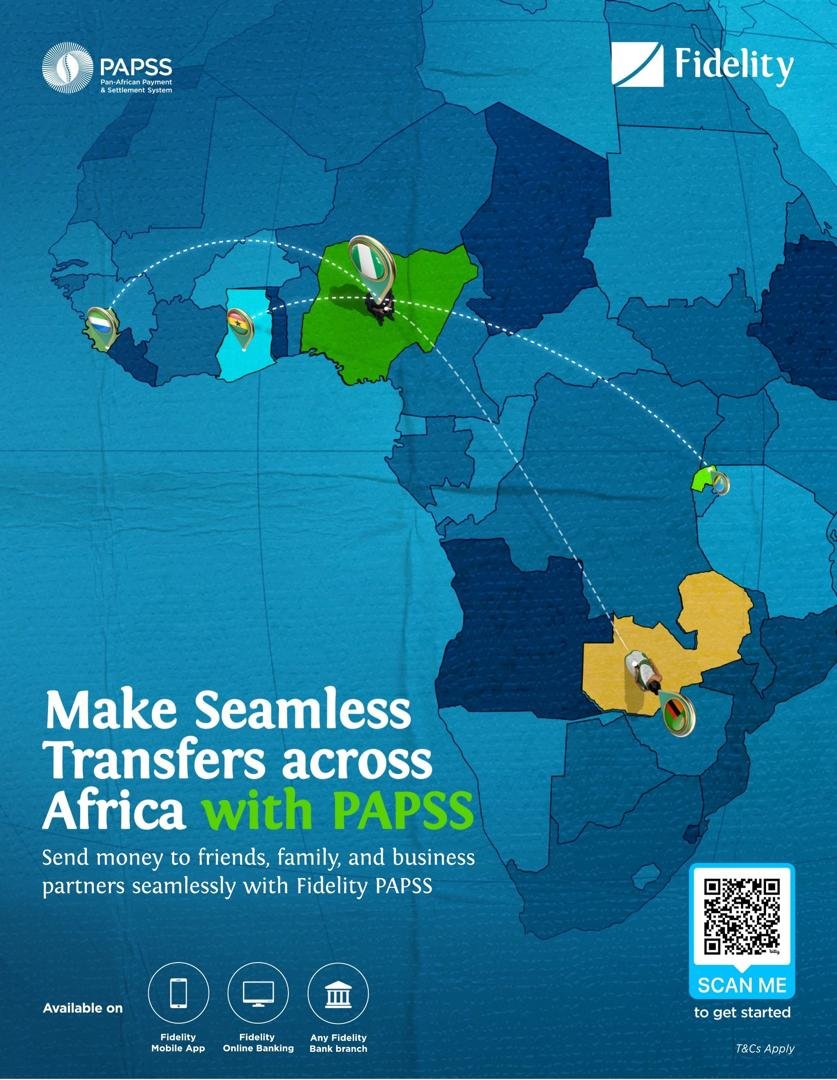
Nigerian businesses seeking to expand into African markets are increasingly turning to the Pan-African Payment and Settlement System (PAPSS) to simplify cross-border transactions, reduce currency-related challenges and speed up payments to partners across the continent.
The payment infrastructure, accessed by Nigerian customers through Fidelity Bank Plc, enables eligible transactions to be initiated in naira while beneficiaries in participating African countries receive the equivalent value in their local currencies.
The development is expected to ease some of the payment difficulties confronting businesses involved in intra-African trade, particularly those sourcing goods, services and raw materials from other African countries.
For instance, a Nigerian fashion entrepreneur buying fabrics from Ghana, a manufacturer paying suppliers in Kenya or a technology company serving customers in Rwanda can use eligible PAPSS transactions without first sourcing US dollars or euros for the payment.
The system is designed to reduce dependence on correspondent banks outside Africa, multiple currency conversions and other processes that can increase transaction costs and extend settlement times.
For businesses, the ability to settle eligible invoices more quickly could improve cash-flow management, strengthen relationships with suppliers and help companies meet delivery schedules.
Fidelity Bank said PAPSS transfers through its platform can be completed in about 120 seconds, subject to applicable requirements and the receiving market.
The bank also provides access to the service through its Fidelity Mobile App, Fidelity Online Banking and branches nationwide, while customers can obtain assistance from relationship managers on documentation and other transaction requirements.
Beyond commercial transactions, eligible PAPSS payments can also be used for approved personal needs, including school-related payments, family support and other permitted transfers across participating African markets.
Fidelity Bank’s involvement in PAPSS dates back to September 2024 when the bank onboarded the platform. The bank said it recorded more than N46 billion in transactions during its early adoption phase before the official launch of its PAPSS service in August 2025.
PAPSS has also identified Fidelity Bank among the first Nigerian banks to meet the relevant integration requirements for the platform.
The bank said its combination of digital banking channels, branch network and experience supporting small and medium-sized enterprises and exporters positions it to assist businesses seeking opportunities in other African markets.
The growth of PAPSS comes amid increasing efforts to deepen intra-African trade under the African Continental Free Trade Area (AfCFTA), which seeks to improve market access and strengthen economic integration among African countries.
As businesses increasingly look beyond Nigeria for suppliers, customers and investment opportunities, efficient payment systems have become critical to sustaining regional commerce.
PAPSS is currently operational across 19 African countries, connecting more than 160 commercial banks and over 15 national payment switches, according to TechCabal.
For Nigerian businesses, the system offers an alternative to some of the traditional complexities associated with cross-border payments, allowing eligible transactions to move directly between participating African markets.
Fidelity Bank urged customers to ensure that beneficiary details, transaction purposes and supporting documentation are accurate before initiating payments, noting that transactions remain subject to applicable regulatory requirements, limits, charges, terms and conditions.
With African trade expected to continue expanding, payment platforms such as PAPSS could play a growing role in helping Nigerian businesses access regional markets and build stronger commercial relationships across the continent.
Through Fidelity Bank PAPSS, customers can send eligible payments in naira to selected African countries while beneficiaries receive the applicable value in their local currencies.