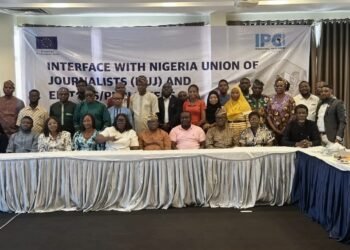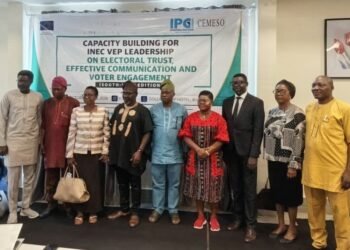












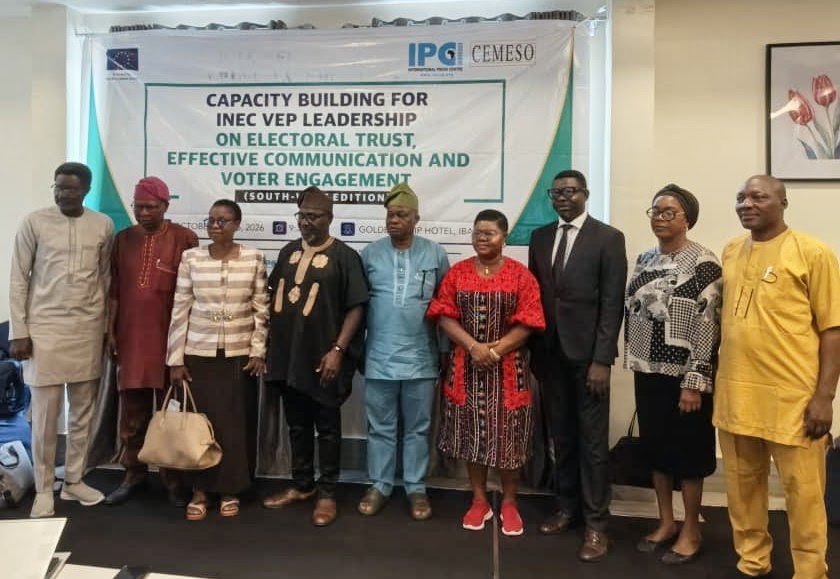
The International Press Centre (IPC) and the Centre for Media and Society (CEMESO) have trained officials of the Independent National Electoral Commission (INEC) in the South-West on effective electoral communication, misinformation management and voter engagement ahead of the 2027 general elections.
The two-day capacity-building programme, themed “Capacity Building for INEC VEP Leadership on Electoral Trust, Effective Communication, Legal Literacy and Voter Engagement,” was held from October 15 to 16, 2026, at Golden Tulip Hotel, Ibadan, Oyo State.
Speaking at the programme, INEC Deputy Director of Information and Publicity, Wilfred Ifogah, said the training was designed to strengthen the capacity of officials responsible for communicating the Commission’s policies, electoral procedures and other essential information to voters and stakeholders.
Ifogah stressed the need for electoral officials to possess accurate information and effective communication skills to explain electoral processes clearly, promptly and efficiently, particularly as the country prepares for the 2027 elections.
He noted that the media environment was already saturated with conflicting information, making it imperative for INEC personnel to distinguish verified reports from false narratives capable of undermining public confidence in the electoral process.
According to him, the training would equip participants with the knowledge and skills to communicate improvements in electoral procedures, address public concerns and prevent misinformation from escalating into electoral crises.
He also cautioned journalists and members of the public against sharing unverified information, particularly artificial intelligence-generated content and deepfakes designed to mislead voters.
“Verify before you amplify,” Ifogah advised, urging journalists to confirm electoral information through INEC’s official communication channels or designated communication officers before publication.
He acknowledged the contributions of IPC and CEMESO, describing their support as valuable to the Commission’s efforts to improve electoral communication and ensure that accurate information reaches different categories of stakeholders.
Earlier, IPC Executive Director, Lanre Arogundade, said electoral trust was built long before election day through the quality, accessibility and credibility of information provided to citizens.
He warned that false claims and negative AI-generated media could spread faster than official corrections, underscoring the need for proactive communication, fact-checking and coordinated responses to emerging misinformation.
Arogundade said the programme would provide a platform for discussions on crisis communication, media relations, the 2026 Electoral Act, misinformation risk mapping, conflict-sensitive communication and inclusive voter engagement.
He added that the discussions would help participants develop practical solutions to challenges confronting Nigeria’s electoral system.
Also speaking, CEMESO Executive Director, Dr Akin Akingbulu, urged Voter Education and Publicity (VEP) officials to prioritise clarity, promptness and efficiency in communicating electoral information.
Akingbulu said the initiative would promote knowledge-sharing among participants and encourage them to replicate the training in their respective states and local government areas.
He explained that the Ibadan programme was the first of four regional engagements, with subsequent sessions scheduled for Jos, Enugu and Kano.
The initiative is funded by the European Union under its Support to Democratic Governance in Nigeria programme, Component 4, Support to Media, and is being implemented jointly by IPC and CEMESO.
The organisers said the programme was aimed at strengthening electoral communication, promoting informed citizen participation and improving public confidence in Nigeria’s democratic process ahead of the 2027 general elections.