










The Federal Government has placed 46 persons who had contact with a diplomat infected with the Bundibugyo strain of Ebola virus on a 21-day no-fly list as the patient’s condition deteriorates into multiple organ failure.
The measures form part of efforts by the government and state authorities to contain Nigeria’s first confirmed Ebola case since 2014, with surveillance, contact tracing and emergency preparedness intensified across the country.
The Nigeria Centre for Disease Control and Prevention (NCDC) confirmed the strain following laboratory tests conducted on the female diplomat, whose nationality has not been disclosed. She is currently in isolation and receiving medical care in Abuja.
According to the World Health Organisation (WHO), the woman recently travelled from Uganda to Nigeria, with symptoms beginning on October 7, four days after her arrival.
She sought treatment at a private health facility in Abuja on October 11, before laboratory tests confirmed the infection on October 20.
The Director of Public Health Laboratory Services at the NCDC, Olajumoke Babatunde, confirmed the strain during an emergency incident management meeting in Abuja on Wednesday.
“We did three levels of tests, but all were molecular. The strain was Bundibugyo,” Babatunde said, while another official disclosed that the patient’s condition had deteriorated into multiple organ failure.
Minister of Aviation and Aerospace Development, Festus Keyamo, said he had directed the Nigeria Civil Aviation Authority to notify local and international airlines to prevent the 46 identified contacts from travelling by air for at least 21 days.
The list comprises 44 people who had contact with the patient at the hospital and two domestic staff.
Keyamo said the restriction would remain in place while health authorities worked to isolate and monitor the contacts until they could establish that they had not contracted the virus.
He also directed the Federal Airports Authority of Nigeria to strengthen surveillance at international airports through enhanced health screening, temperature checks, travel history tracking and digital health declarations.
Meanwhile, the Coordinating Minister of Health and Social Welfare, Professor Muhammad Ali Pate, has urged Nigerians to remain calm, assuring them that the government has the public health institutions and experience required to contain the infection.
He said the Federal Government was collaborating with Uganda and intensifying contact tracing to prevent further transmission.
State governments have also stepped up preparedness.
Anambra State reported that 40 persons of interest had been followed up, with 33 completing their monitoring period and seven remaining under active monitoring as of October 20.
Niger State has activated emergency operations, while Ogun State is tracing 111 persons of interest.
Other states have strengthened surveillance, laboratory readiness and public awareness campaigns.
The WHO said there is currently no approved vaccine or specific treatment for the Bundibugyo strain, making early detection, isolation and effective contact tracing crucial to containing the disease.
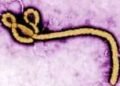
Ebola spreads through direct contact with the blood or other bodily fluids of infected people, or contaminated materials.
Nigeria successfully contained an Ebola outbreak in 2014 through coordinated surveillance, isolation, contact tracing and public health interventions.
The Federal Ministry of Health has urged Nigerians to follow official health advisories, cooperate with contact-tracing teams and avoid spreading misinformation as the response to the latest case continues.