









Nigeria has been declared free of active Ebola cases following the evacuation of the country’s only confirmed patient and her husband to Switzerland, although health authorities will continue surveillance and contact tracing to prevent further transmission.
The World Health Organisation’s Regional Director for Africa, Professor Mohamed Janabi, announced this on Monday, October 26, 2026, following the medical evacuation of the Swiss couple from Abuja.
Janabi said the patient had been stabilised by Nigerian medical personnel after successfully managing the acute phase of the illness.
He commended the Federal Government, healthcare workers, emergency responders and partner organisations for their roles in containing the case, describing the response as evidence of Africa’s capacity to manage public health emergencies.
However, he warned against relaxing preventive measures, noting that Nigerian health authorities would continue monitoring 52 contacts linked to the patient.
Switzerland is expected to take responsibility for the patient’s continued treatment and the monitoring of her husband, who was identified as contact number 53.
Nigeria’s latest Ebola case was imported from Uganda, where the patient had travelled before returning to Abuja.
The Federal Government confirmed the case on October 20, 2026, marking the country’s first confirmed Ebola case in more than a decade.
The patient, a Swiss citizen married to a Swiss diplomat based in Nigeria, reportedly developed symptoms on October 7, four days after returning to the country.
She sought medical attention in Abuja on October 11 and subsequently tested positive for the Bundibugyo strain of the Ebola virus.
The precise source of her infection has not been established.
Although the patient had travelled to Uganda, Swiss officials reportedly indicated that she had not visited the Democratic Republic of the Congo, where the current outbreak originated.
Health authorities are investigating the possible route of transmission, including a potential link to other cases associated with travel through Uganda’s Entebbe International Airport. However, no direct transmission link has been established.
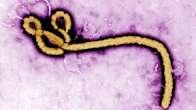
The Bundibugyo strain is a distinct type of Ebola virus associated with the current outbreak in parts of Central and East Africa. The case prompted heightened surveillance and preparedness measures across the region.
FG Intensifies Containment Measures:
Following confirmation of the imported case, the Federal Government, through the Federal Ministry of Health and Social Welfare and the Nigeria Centre for Disease Control and Prevention, activated emergency response measures to prevent further spread.
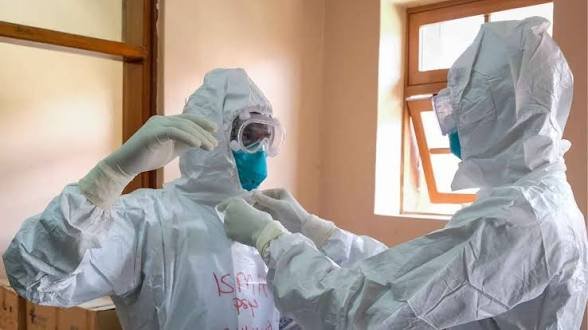
The measures included identifying and monitoring people who had contact with the patient, investigating the case, strengthening infection-prevention and control procedures, and providing protective equipment and other essential supplies to healthcare workers.
Health authorities also intensified surveillance and coordination with state health agencies, the WHO and other partners.
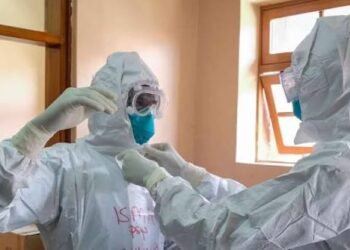
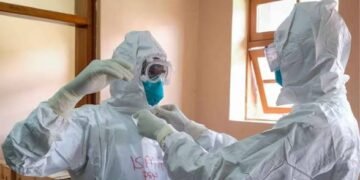
Medical personnel involved in the patient’s treatment observed infection-control protocols, while public health officials worked to identify and monitor individuals who might have been exposed to the virus.
The patient’s evacuation to Switzerland was carried out under medical and public health precautions.
The Coordinating Minister of Health and Social Welfare, Professor Muhammad Ali Pate, had warned that the patient’s improved condition did not necessarily mean she was no longer infectious.
He said the evacuation was conducted with appropriate precautions and commended the medical personnel who treated the patient, as well as the public health teams that coordinated the operation.
The WHO’s announcement marks a significant development in Nigeria’s efforts to contain the imported case. However, continued surveillance, contact tracing and strict adherence to infection-prevention measures remain essential to guard against further transmission.