






By Lasisi Olagunju
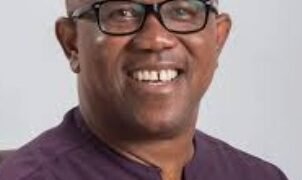
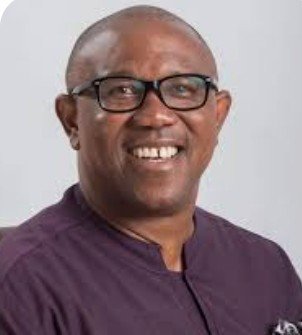
Where is Peter Obi? Someone asked that question last Friday. Why, he wondered, had he been somewhat quiet lately? He even missed a town hall meeting with stakeholders in Jos, Plateau State, that same Friday.
“That is true,” I told myself, mentally reviewing the popular politician’s recent public engagements. There had not been much to see.
I called a very vocal Obidient near me in Ibadan. “Where is your candidate? If I were an Emilokan, I would just say he has become tepid, like boiling water poured into a flask of cold water.”
My friend hesitated, then conceded that Obi might have scaled down his engagements. But, he insisted, that did not mean his candidate was tired.
“Or that he is quitting the race,” I helped him finish.
“He cannot even try quitting. He dare not.”
I agreed. Obi has travelled too far to turn back casually. His core Igbo supporters would roast him.
Yet some of those supporters have helped to cool the enthusiasm his candidacy generated in 2023, especially outside the South-East. In the South-West, their comments and social media posts give undecided Yoruba voters reasons to freeze and recoil. They appear determined to make enemies where their candidate needs voters.
Popular Chief Dan Ulasi was recently on Arise TV, reviving the familiar allegation that elected Yoruba legislators crossed from the NCNC to deny Dr Nnamdi Azikiwe leadership of the Western Region in 1951. That is a lie.
The false story keeps resurfacing in certain pro-Obi conversations. Those repeating this sob story are not bothered about history and what their version of yesterday does to their candidate’s prospects today, and tomorrow.
The five Ibadan legislators at the centre of that 1951 allegation were Chiefs A.M.A. Akinloye, D.T. Akinbiyi, S.O. Lanlehin, Moyosore Aboderin and S.A. Akinyemi. They were elected on the platform of the Ibadan Peoples Party, popularly known as Mabolaje; they subsequently aligned with the Action Group. The sixth successful IPP candidate, Adegoke Adelabu, aligned with the NCNC.
How were they elected? “On Monday, 24 September, 1951, the eighty-five members of the Final College from the city (Ibadan) met the thirty from the rural areas to elect the six members of the new Western House of Assembly from Ibadan Division. There were twenty-one candidates, but it was the six I.P.P. men who won: M. Aboderin polled 82 votes; A. M. A. Akinloye, 81 votes; S. O. Lanlehin, 67 votes; A. Adelabu and D. T. Akinbiyi, 61 votes each; and S. A. Akinyemi, 59 votes.” I got this from ‘The Price of Liberty: Personality and Politics in Colonial Nigeria’ by K. W. J. Post and G. D. Jenkins, published in 1973 by Cambridge University Press. Check page 105.
The history of that era is well documented, even in colonial archives. Yet some ethnic champions of the NDC candidate prefer their inherited concoction to the record.
Long ago when I first encountered this controversy, I decided to search for the truth. I began with Azikiwe himself. His autobiography, My Odyssey, was an obvious place to look. On pages 304 and 305, he listed 20 legislators who “disappointed” his party. He then proceeded to describe them as “members or supporters or sympathisers” of the NCNC. Those words triggered my curiosity. The three categories are not synonyms, especially in politics. A supporter is not necessarily a party member; a sympathiser is decidedly not a party candidate. Which were these men? The national leader of the NCNC was not sure. Yet because of them, the great Zik put pen to paper and declared that his “NCNC was under the impression that it had won the election.” Read that again: “under the impression.”
The distinction becomes more revealing on page 305. There, Azikiwe identified five legislators from what is now Delta State who, he wrote “associated with the NCNC after the election.” He named them as G. B. Ometan, P. K. Tabiowo, O. Oweh, J. Otobo and Yamu Numa. Elected on the platform of the Urhobo Progress Union (UPU), these legislators subsequently supported Zik’s party on the floor of the House. Yet another member of the House, J. G. Ako, also sponsored by the UPU, was counted by Zik among the legislators “who disappointed the NCNC” because he aligned with the Action Group. Zik also had nice words for IPP’s Adegoke Adelabu who went for his NCNC. Those who joined Zik on the House floor merely “associated” with his party; those who went elsewhere supposedly crossed the carpet.
Now, I ask: If Adelabu of Ibadan Peoples Party and those five legislators elected on the platform of the Urhobo Progress Union could choose the NCNC after the election, why must the five Ibadan legislators’ choice of the Action Group be remembered as a betrayal? Why is one alignment legitimate and the other an ancestral offence?
More interestingly, Zik himself on page (304) identified Mabolaje as the party that sponsored the IPP legislators. Yet he accused them of “disappointing” the NCNC. How did men elected on another party’s platform become his party’s property? Should an expectation of support become proof of party membership? Or, maybe, I should ask my politics teacher to guide me to the conclusion that a disappointed expectation is an evidence of defection.
Some people are more sinned against than sinning. On Zik’s list of betrayers were some other non-Yoruba legislators. One of them was the legendary Chief Anthony Enahoro. Azikiwe claimed that Enahoro contested the election as a member of his NCNC. But Enahoro was a foundation member of the Action Group. Enahoro’s political history says that in 1950, he and Arthur Prest founded the Mid-West Party which in February 1951 became part of the Action Group at inception. Zik listed Arthur Prest also as a betrayer. In fact, Prest was number one on the list. Check page 304.
The story is that Western House of Assembly had 80 elected seats. In the parliamentary system of that era, control of the regional government depended on majority support within that House. For security and logistics reasons, the elections were staggered between September and December 1951. At their conclusion, Awolowo’s Action Group had 38 seats; Zik’s NCNC and its supporting parties/ independents, 25; the Ibadan Peoples Party (IPP), six; and the Ondo Improvement League, two. The balance was held by other smaller parties or were independents.
The Great Zik saw the figures and was not happy. Like the old warhorse he was, he scrambled to draw buyers into his market. I call it pè’rò sọ́jà. Much as we see today, he began sending out “defection” forms to the smaller parties. With the Ibadan people, he failed spectacularly.
From that day of failure, Zik and his party and his newspapers branded the Ibadan men betrayers. On 18 October, 1951, one of his newspapers, The Defender, published an article titled “History of IPP Men to Be Given Soon: IPU Digs Out 1920 Files.” The following day, it sustained the attack, quoting someone as saying that “the type of politics the IPP is trying to introduce is exactly the type that will ruin Ibadan.” The attacks were that bad. It was like a lecher calling a married woman a whore because she had spurned his advances.
In a river, you step into water before your feet greet the sand. It is necessary to state that long before the House first met on 7 January 1952, five of the six IPP legislators had aligned with the Action Group. The alignment preceded the House’s inauguration. You cannot cross the floor of a House that has not yet opened its doors.
We say in my part of the country that before you learn how to fight, you must first learn how to state your case. Ahead of the election, Mr Harold Cooper, the colonial government’s Public Relations Officer, asked the parties to submit lists of their candidates to his office. Only the Action Group and the IPP complied. The others either rebuffed the request or ignored it.
And the controversy started soon after the election. When it started, Cooper called a press conference in Lagos where he put a lie to Azikiwe’s claims. He said: “Of the winning candidates, the names of 38 were on the list sent to me by the Action Group. The six successful candidates at Ibadan were all among those who had been identified to me as representing the Ibadan People’s Party. No claim of any kind had reached us about the party affiliation of the remaining successful candidates.” That was the official statement of the colonial government which supervised the election.
Yet, falsehood has not stopped grappling with the truth 75 years after.
Inherited grievances built on falsehood will always hurt where and when it matters. Anyone who tells history owes it a thorough and honest examination of facts and records. Here, I have used evidence supplied by Zik himself. For South-East politicians seeking an Igbo presidency now or in the future, repeating a discredited account as settled history may win applause among the faithful. It will never carry them across the Niger.
………………………………………………
The musketeers of Lagos-Ibadan press
“You and your friends were known as the Three Musketeers. Who gave you that name?” I asked the patriarch of the Nigerian media, Chief Olusegun Osoba.
“Chief Awolowo did. We were Papa’s advisers on all public and political issues.” He told me on Friday.
Every expression of note in English has a history. The original Three Musketeers rode into public imagination through a newspaper. Alexandre Dumas’s novel ‘Les Trois Mousquetaires’ appeared in instalments in Le Siècle newspaper in 1844. The three men, Athos, Porthos and Aramis, stood for a fellowship whose watchword was “All for one, and one for all.” More than a century later, Awolowo found his own three in the newspaper houses of Ibadan.
Osoba and the other two legs of the tripod, Messrs Felix Adenaike and Peter Ajayi, had made their mark in journalism and caught the sage’s eye.
“We met with him every other week,” Osoba continued. In Lagos or Ikenne, they discussed and firmed up policy and politics deep into the night. At 3 or 4 a.m., Papa’s door would open, and the musketeers would begin their journey back to Ibadan.
“Nothing bad will happen to you,” their host would pray for them.
Chief Osoba was Managing Director of The Sketch; Adenaike, Editor-in-Chief of the Nigerian Tribune; and Ajayi, Managing Editor of The Sketch. The mafia was Ibadan-based; Lagos had no mouth there.
Then came Buhari’s coup on December 31, 1983. Osoba became Managing Director of the Lagos-based Daily Times, leaving Ajayi to inherit his Sketch mantle in Ibadan.
The government, the military and the North noticed their widening reach. And with that, the “Lagos-Ibadan press axis” entered the vocabulary of Nigerian politics and public commentary. At its core were three newspapers: the Daily Times, the Nigerian Tribune and The Sketch. One in Lagos, two in Ibadan.
Through Osoba’s headship of the Daily Times, Lagos supplied one leg of that formidable tripod of the early 1980s. But the man at the helm had himself come from inland Yorubaland
In that respect, he was continuing an old tradition: the country behind Lagos feeding the city, and as it gathered the wealth and the glamour, the towns beyond the coast kept supplying people who gave it meaning.
Consider Herbert Macaulay, the Lagos nationalist whose family roots reached deep into Oyo country.
Macaulay’s relationship with the Daily Times was considerably less pleasant than Osoba’s. Fred Omu, in ‘Press and Politics in Nigeria, 1880–1937’, records that the newspaper’s leading Nigerian figures were bitterly opposed to him. In 1927, Macaulay and Dr John Akinlade Caulcrick bought the rival Lagos Daily News, the first daily newspaper in British West Africa. With that newspaper, Macaulay fought the colonial government and his political opponents. The man whose voice ruled Lagos had an ancestral road leading back to the interior.
His authorised biography, published in July 1946, two months after his death, identifies him as the seventh child of Reverend Thomas Babington Macaulay, founder and first principal of the C.M.S. Grammar School, Lagos. The story gets more interesting from that point. On its first page, the book traces Macaulay’s father’s ancestry:
“The late Rev. T. B. Macaulay was the eldest of the three sons of Ojo Oriare of Ore Aganju in the district of Ikirun in the Yoruba Province of Oyo who was popularly known as Daddy Ojo at Kissy in Sierra Leone where he had been taken and liberated during the trans-Atlantic traffic in slaves, and was practising his profession as a native doctor which he had acquired in the Yoruba country before his capture; and his mother, the wife of Ojo Oriare was Kilangbe, a grand -daughter of the founder of Ile-Ogo in the Yoruba Province of Oyo in the Southern Province of Nigeria” (page 1).
This family history travelled a terrible circuit: from Oyo country into slavery, through liberation in Sierra Leone, and back to the coast at Lagos. Out of it came a pioneer of secondary education and, in the next generation, a father of Nigerian nationalism, and a major stakeholder in the country’s newspaper press. That contribution to Lagos was flesh and blood, learning and leadership.
That history, and similar ones, ancient and contemporary, were on my mind when, a day before our telephone conversation, Chief Osoba arrived to chair a major media event on Victoria Island, Lagos: the 80th birthday celebration and book launch honouring another hinterland great, Mr Lade Bonuola, The Guardian’s pioneer editor and later Managing Director.
Bonuola’s children, in conjunction with the thoughtful management of Premium Times, put the celebration together. The book, ‘Ladbone: A Life in Print’, according to its publishers, “draws on contributions from more than 80 editors, media managers, academics, political figures and industry experts.” Bonuola co-founded The Comet in 1999; seven years later the newspaper metamorphosed into The Nation. Premium Times appropriately described the man behind it all as “one of the most consequential editors in the history of the Nigerian press.”
Almost everyone who was anyone in the Nigerian media was at the event.
So overwhelming was the gathering that Mr. Azu Ishiekwene, Leadership newspaper’s Managing Director, who had come from Abuja, looked round the hall and whispered to me and Festus Adedayo a dark joke at our collective expense: Abuja should simply come and seal the hall, and all its problems would be over.
We laughed.
But beneath the laughter lay an acknowledgement of the power gathered in that room, and of the old Lagos-Ibadan press axis that had helped to shape it.
I greeted Chief Osoba the Yoruba way. He ‘lifted’ me up, looked round and spotted Tribune’s ace columnist, Festus Adedayo.
“I knew he would be here,” he smiled. “The two of you are always together.”
I laughed and reminded him of his own ubiquitous group: “The Three Musketeers.”
He laughed too.
There is something about Ibadan and its rich rival, Lagos.
We say here in the interior that Lagos has mere money; royalty belongs to Oyo: Owó l’Èkó ní; ará Ọ̀yọ́ ló l’ọba. Even the Lagos-Ibadan press axis has its roots, and its core in Ibadan.
I am not done with the two cities and the axle that connects them to the Nigerian story.
The Guardian prides itself as the flagship, but it was born in Ibadan.
Speaking as event chairman, Osoba disclosed that for its first three months, The Guardian was printed in Ibadan, then “shipped” to Lagos.
Printed in Ibadan? Yes, at The Sketch Press, where Osoba was Managing Director.
On Friday, I called Chief Osoba to hear the history again. His account did not shift from what he had told us in Lagos on Thursday.
“The Guardian started as a weekly paper. The first edition was published on Sunday, February 27, 1983. The paper’s printing press had not arrived, so I printed The Guardian at The Sketch in Ibadan for about three months. The newspaper went daily in July, then started printing in Lagos,” he told me.
Ibadan is Oyo, and the Oyo-Yoruba warn that a visitor does not recount the town’s history to the host (Àlejò kì í pìtàn ìlú f’ónílé). Here was the host himself, recalling where he laid the newborn’s head.
Why, then, do The Guardian people mark their anniversary in July? Osoba wondered aloud in Lagos on Thursday and again on the telephone with me on Friday.
“They keep celebrating the Daily printed in Lagos. But their history started earlier with the weekly printed in Ibadan. It is wrong,” he said.
The British biologist J. B. S. Haldane wrote that “everything has a history, often a very strange one.” Our Three Musketeers and their Lagos-Ibadan press axis have theirs. Lagos may celebrate its coming of age; in the story of our press, its umbilical cord remains buried in Ibadan.
From the thousands of proverbs in Prof. Oyekan Owomoyela’s ‘Yoruba Proverbs’, I picked this for here: “Ìlasa ò sunwọ̀n; ta ló bí ilá?” The okra leaf is no good? Who, then, gave birth to the okra? Lagos may wear the crown of wealth; the road that brings that wealth passes through Ibadan.
And that road is never tired of carrying traffic back and forth. On Tuesday, 24 November (about one month from today), Ibadan will host another rainbow gathering of the press and politicians; the academia, business and government as I present ‘Sitting on Two Hundred Needles’ and five other books. The collections span Monday Lines from its inception in October 2011 to early 2025. One runs to 627 pages. Ibadan is a city that has nurtured newspapers, made journalists and preserved their words in books. Next month, we are adding more of our pages to its unfinished story.
•Published in the Nigerian Tribune.