







By Festus Adedayo
The 2027 election campaigns promise a reactivation of the First, Second, Third, and Fourth Republics’ campaigns of acrimony and disturbing rhetoric. It will be a replica of a dog-eat-dog battle among Nigerian politicians. It brings to mind image of birds violently uprooting each other’s feathers.
This fight for the heart of the electorate is demonstrated by the Yoruba dramatization of a fight between the Bulbul bird (ẹyẹ Òpéèré) and the hawk (Àwòdì). As each violently plucks the other’s feathers, the Yoruba wonder at this mutually destructive battle. Their amazement is rendered thus: “Àwòdì dìgbò lu Òpéèré, irú òpéèré tu mó Àwòdì l’ówó, wón wá so pé eré ni ẹyẹ oko ńbá ẹyẹ oko se. Irú eré wo l’ẹyẹ oko ńb’ẹyẹ oko se tí ẹyẹ wá ńtu ìyé ẹyẹ?” (The hawk pounces on the Bulbul bird; its tail feathers are stuck to the hawk’s beak; but it is said they are merely engaged in a banter. What manner of banter among fellow birds will necessitate the destructive uprooting of mutual feathers?)
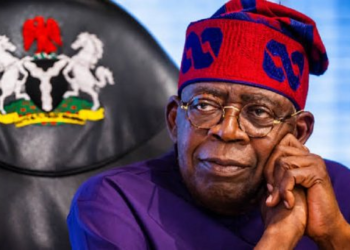
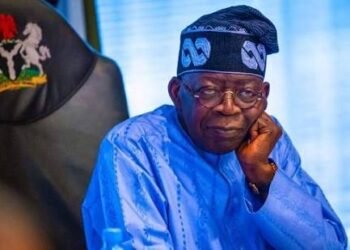
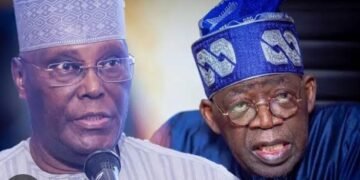
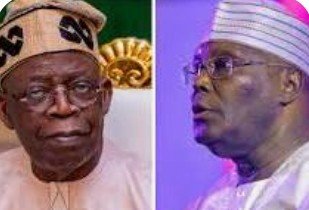
Already, both Atiku Abubakar and Bola Tinubu have brought out teasers from their apó – the pouch of their political wiles. Tinubu’s certificate or certificateless-ness has become a tense issue of political discourse. Like 2023, the battle has shifted to the courts where serial presidential campaigner, Atiku Abubakar, embarked on his earlier political forensic scan of Tinubu’spast. The issue for determination stems from ADC’s suit filed at the Federal High Court in Abuja, targeting an alleged discrepancy in Tinubu’s NYSC discharge certificate submitted to INEC. It allegedly bears the name “Tinubu Bola Adekunle” rather than Bola Ahmed Tinubu. Atiku’s ADC is seeking a judicial determination ahead of the political war. You can be sure the Àwòdì will pull the Òpéèré’s feathers on this score as campaigns heat up.
This reminds me of 1983. Whether the bullets hit him inside the State House in Ikoyi, Lagos, or wherever he was, President Shehu Shagari must have been rattled. What strange amity exists between birds that leads them to fiercely pull off a fellow bird’s feathers? This particular bullet hit the president from a Maroka(praise-singer) on the campaign rostrum in Kano. The crowd was like pebbles by the seashore – riotous, apparently struck by a strange god whose arrows pierce Nigerian crowds at campaign rallies. The crowd sang and danced excitedly. Then, in Hausa, the voice of the Maroka shot out through the microphone:
“Who went to Togo, drank alcohol, and grabbed a woman? / He grabbed herbuttocks / She said, ‘Stop it, old man!’ / He said, ‘Wait, listen, I’m the President of Nigeria!’ / The President of Nigeria, who absconds with the nation’s money… / But now NPN nominates him / They even give him a title / To hell with you, niggardly ones! / Our leaders are whiskey drunkards / We’ve had enough of you / Our whiskey leader, we say to you, Allah is sufficient for us!”
Last Wednesday, in compliance with the Electoral Act, INEC literally removed the chains from the necks of Nigeria’s political tigers. The rituals of dangerous rhetoric, propaganda, fake promises, word coinages, and acrimony that we call political campaigns officially began.
Political campaigning is an essential element of democracy. All over the world, candidates persuade voters to cast their votes for them and their parties, using the platform to canvass policies. In his 1974 book, Popular Images of Politics, Dan Nimmo notes that politics is drama – a submission resulting from direct investigation of political phenomena. William Miles, borrowing a leaf from him in The Rally As Ritual, offered an even grimmer summary of political campaigns.
The barb thrown at Shagari came against the backdrop of his earlier criticism of other northern political parties – especially the People’s Redemption Party (PRP) – as being “un-Islamic.” The Maroka’s attack on him was seen as a perfect riposte.
In the traditional Hausa social structure, Maroka occupied a relatively low place. The Maroki (singular) or Marokiya(female) were traditional musicians, poets, and oral historians. While traditionally persons who begged for gifts or praise-sang (roko) for rulers, wealthy patrons, or brides at weddings in exchange for money or social status, today’s Maroka functions more like a court poet. Indeed, the Marokihave left the innocent turf of entertaining bards; the politicization of praise-singing in Hausaland transformed them from innocent dispensers of praise into agents of acidic political insult.
This tendency to descend into political abuse began in the First Republic. By the Second Republic, the Maroka as a campaign tool—flatly rejecting restraint and engaging in shocking rhetoric—gained ascendancy. By traditional Hausa standards of social etiquette, this crossed the line. Unguarded Maroka weaponized defamation. Seeing the massive crowds courted by these bards, politicians made it a fad to “buy” a favorable image through them, showering them with gifts to receive unmerited public adulation while unleashing arrows at their enemies.
The NPN equally deployed its own Maroka. In the 1983 election, it hit the NPP: “Every slimy NPP stalwart is a dog / If he dies, do not bury him / Bury him in fire / The Ingrate Dog! / Jatau is a slave to the Jews / He will teach your sons to become effeminate / They will tie women’s wrappers round their hips / He treats people like dirt / Kano has elected a complete hypocrite / May Allah take away this Satan, King of the Ingrates!”
The opposition PRP took its own pound of flesh. At campaign venues, their Marokamocked the NPN symbol – a house surrounded by maize: “Here is a house with a poster / Look, what is the symbol? / They drew a house without a gate / With corn sprouting a ‘beard’ (the fiber on the ear of corn) / An ear of corn is shameless / Like a child, it is carried on its mother’s back / But it sprouts a beard / Now if that isn’t the height of shamelessness / To sprout a beard on your mother’s back / It is madness and nonsense to have corn as a symbol / We shall pluck the corn, break its ear / Throw it into the fire / Burn the beard! / Don’t be ensnared by the enemy / Traitors of the people, Traitors of our country.”
The 1983 general elections had heated up, and political thugs were having a field day. The ruling NPN was in a fierce struggle to win the election. In Kano, the battle was fiercer: PRP candidate Sabo Barkin Zuwo was sure of victory, as was the incumbent governor, Abubakar Rimi of the NPP. At campaigns, barbs were thrown like confetti—a riotous scenario the Yoruba describe as “Ẹni orí yọ, ó dì’lé!”
At this time, Shagari’s administration had made life unlivable for ordinary citizens. The economy had collapsed under crashing global petroleum prices, heavy foreign debt, and systemic mismanagement. With the Economic Stabilization Act of April 1, 1982—manifesting as Austerity Measures—political disorder became a national staple. The barbs against Shagari were Northern voters’ way of criticizing the NPN administration. The ruling party was embroiled in accusations of financial embezzlement and heavy consumption of exotic champagne at the expense of public welfare. The media reported scandalous behavior by ministers, highlighted by Umaru Dikko’s claim that he would only believe Nigerians were suffering if he saw them scavenging for food in refuse bins. These perceived ungodly conducts contrasted sharply with the belief that leaders must care for the led. It gave rise to rich oral poetry satirizing political corruption and the re-nomination of incumbents.
Women were not left out of the hustings. Earlier in the First Republic, Adanma Okpara (wife of Eastern Region Premier Michael Okpara), Mrs. Hannah Idowu Dideolu Awolowo, and Faderera Akintola campaigned actively. In 1964, Adanma canvassed in the Western Region for the UPGA alliance between her husband’s NCNC and the Action Group. In 1960, ahead of the House of Assembly elections, Mama Awolowo addressed the crowd at Asipa Market in Oyo with a microphone, declaring that the NPC and NCNC “retard progress in the West just as they have done in the North and East,” earning loud ovations. Given the fierce rivalry between their husbands, Faderera Akintola routinely countered her.
For more on the above, see William F. S. Miles’ 1989 piece, “The Rally as Ritual: Dramaturgical Politics in Nigerian Hausaland,” Comparative Politics, Vol. 21, No. 3).
Again last week, both Atiku and Tinubu engaged in what the Yoruba call the unceasing, perennial battles of co-housewives – mirrored in the saying, “Ìwọ kan l’ánà, ìwọ kan l’ónì, bí ẹkùn apọkọjẹ”. It describes an individual who relentlessly consumes space, much like a stubborn, nagging wife. Yet, for these politicians, these perennial battles are purportedly fought for the betterment of Nigerians.
Atiku took umbrage against the president’s removal of the petrol subsidy and the liberalization of the foreign exchange market. The effects of these knee-jerk policies – which the president confessed he took when “the spirit” pounced on him – have been a sharp rise in inflation, a spike in transport costs, and a skyrocketing cost of living. “If elected, I will bring back the oil subsidy, and whoever stole the money must refund it,” the former Vice President declared – a position where Atiku reversed himself as easily as ice melts into water, having previously supported the measures. While meeting the Osun State governor last week, the president fired back, describing Atiku’s proposal as a “demonstration of serious ignorance on governance and economy.” People see it as raw and unstatesmanlike. The commentariatimmediately reminded Tinubu of his own hypocrisy, recalling how he fiercely attacked President Goodluck Jonathan’s attempt to halt the subsidy regime in 2012.
What remains unchanged is that ordinary Nigerians endure unbearable pain, their necks stretched long like the àgùnfọn(giraffe) under the fuel subsidy removal. They see helplessness in the government’s futile attempts to return them to their pre-May 2023 living standards, while official spokespersons recite economic policies as if citizens can feed on theories. This is why Atiku cannot be entirely faulted. While subsidy payments served as an ATM for government vermin, its withdrawal under Tinubu has become a filthy lucre agbónmágbe – a corrupt source that never runs dry – for Aso Rock gluttons who siphon the sweet bone marrow (mùdùnmúdùn) into their agbada. (Agbónmágbe takes its name from Agbónmágbe Bank, founded May 2, 1945in Ibadan by Chief Mathew Adekoya Okupe, which transformed into Wema Bank Limited in 1969 after its acquisition by the Western Nigeria Marketing Board).
The presidential campaigns promise a deeper descent into ad-hominem attacks by political gladiators. This pattern will likely intensify when governorship campaigns begin. Politicians will do nothing new, avoiding the core question of why Nigerian politics remains trapped in personal invective. We are reminded of Ola Rotimi’s Our Husband Has Gone Mad Again (1977), where the politician Lejoka Brown adapts the national anthem as a campaign weapon, and Chinua Achebe’s A Man of the People (1966), where the corrupt Chief M. A. Nanga uses songs, money, and local dialect to purchase political relevance.
Language is “the key to the heart of the people”, so says a comment. “If you lose it, you lose the people; if you keep it safe, it unlocks their hearts.” This is the paramount key Nigerian politicians will use moving forward, weaponizing speeches, jingles, and campaign songs. Propaganda will come in handy. As defined by scholars, propaganda aims to misinform, mislead, and consciously indoctrinate by slanting facts while withholding pertinent truths to divert attention, often wrapping rhetoric in loaded questions.
This was evident in Lagos State in 2007. When then-Governor Tinubu backed Babatunde Fashola as his successor against opposition candidate Musiliu Obanikoro, the Fashola campaign group sarcastically asked voters at rallies: “…what would have happened if Koro (Obanikoro) had been chairman for 3 years?” They supplied the answer: “The whole of Broad Street would have been razed to ashes.” They asked further: “Should this man ever have the effrontery to become the governor of Lagos state in this era of accountability and transparency?” As the crowd chorused, the campaign warned that Alausa “must not catch fire!” and urged Lagosians to elect a credible governor. Days later, the Obanikoro group hit back: “…Can 2 weeks of ‘patch-patch’ activities salvage eight wasted years?” Obanikoro later added another expletive aimed at Tinubu: “They told us they have reformed the economy; which economy?”
Nigerians will witness more vague and abusive utterances throughout these campaigns. While on a presidential campaign in Akure in 2007, Olusegun Obasanjo freely used vulgar language, calling a former governor “a liar” and saying, “I don’t know whether his mother’s rival cursed him.” He said further of Atiku: “When he says good morning to you, you have to open the window first to check what time of day it is before you answer him.”
Politicians will also resort to word coinages and colloquialisms. In that same 2007 Lagos race, Obanikoro’s campaign team spun Fashola’s name into argot, urging voters to “Fa! Fa! Fa! Fashy [discard] them!” It counter-attacked by playing on Obanikoro’s name, declaring: “…This is why we must reject the PDP man ‘Koro’ (bitterness) in Lagos… PDP must not be allowed to ‘Koro De’ Lagos…” – a homophone of the Yoruba phrase Ikoro-de (bitterness has arrived). Also, when Muhammadu Buhari campaigned, his past military regime’s harshness was coined into “Bruharity” to imply that brutality awaited voters if he were elected. Politicians will deploy abusive songs and every linguistic weapon available in their quest for power.
As the 2027 campaigns unfold, the persistent return to acrimony, linguistic trickery, and personal invective reminds us that while the political actors may rotate, the fundamental mechanics of Nigerian political warfare remain unchanged. Rather than offering substantive policy debates, candidates continue to rely on traditional tropes, weaponized language and public spectacles to capture power. Until the electorate demands clear governance strategies over dramatic displays, Nigerian politics will remain an ongoing loop of feather-plucking gladiators – a spectacle where the politicians battle for victory, but the public pays the price.
•Published by the Sunday Tribune.