









•The Economics of Power — Money, Resources and Political Sustainability
By Lanre Ogundipe
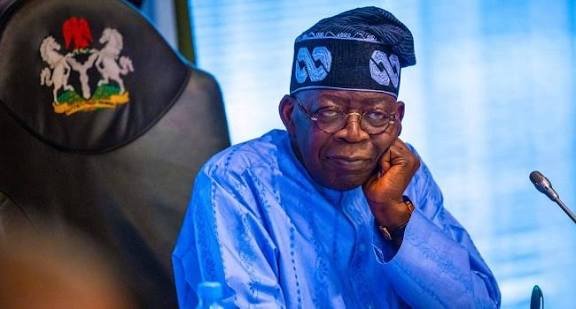
If Part 6 examined the intelligence that drives President Bola Ahmed Tinubu’s political method, the next layer of analysis must confront a more material question: what sustains it? Political systems are not maintained by strategy alone. They require resources—financial, institutional and organisational—through which influence is preserved, extended and reproduced.
Power, in practice, has an economic foundation.
This foundation is often reduced in public discourse to campaign financing or patronage. While these are visible components, they do not fully explain durability. For a political system to endure across cycles, it must possess continuity of capacity—an economic structure that sustains organisation beyond elections and enables influence even in the absence of formal office.
This is where the Tinubu model becomes analytically instructive.
His continued centrality in Nigerian politics after leaving the Lagos governorship in 2007 suggests that his influence was not merely positional but structural. Power did not recede with office; it was retained, adapted and redeployed. Such continuity is rarely possible without an underlying resource base.
The first principle, therefore, is straightforward: political power requires a material backbone.
Elections require financing. Party structures require maintenance. Mobilisation—whether electoral, institutional or elite—demands logistics and funding. In systems where this backbone is weak, political organisation becomes episodic—visible during campaigns but unstable thereafter.
Durable systems operate differently.
They sustain capacity between electoral cycles.
In Tinubu’s case, this continuity is closely associated with the transformation of Lagos into a financially resilient sub-national entity. The expansion of internally generated revenue, the strengthening of tax administration and the assertion of fiscal autonomy created a state with greater economic independence than most others in the federation.
This shift had consequences beyond governance.
It altered the political economy of power.
A state with strong internal revenue capacity is less dependent on federal transfers and more capable of sustaining long-term planning. It can support infrastructure, retain institutional memory and maintain administrative continuity. More importantly, it creates an ecosystem in which governance outcomes, economic activity and political organisation reinforce one another.
Lagos, in this sense, functioned not merely as a political stronghold, but as an economic platform.
From this platform, a broader political network could be supported—through continuity, coordination and strategic alignment.
This introduces a necessary distinction between patronage and political investment.
Patronage, in its conventional form, is transactional. It distributes benefits for immediate loyalty but often lacks durability. Political investment, by contrast, is structured. It involves the deliberate placement of individuals, the strengthening of institutional relationships and the creation of systems that yield long-term returns.
The Tinubu model appears to operate within this layered framework.
Support is not merely dispensed; it is organised. Relationships are not only maintained; they are embedded within structures that endure beyond individual transactions. This does not eliminate patronage—it reconfigures it within a broader system of political reinforcement.
Yet this structure raises a critical institutional question: how are such systems financed and regulated within a democratic framework?
This is not an individual question. It is systemic.
Nigeria’s political financing environment is characterised by formal rules but uneven enforcement. Campaign finance regulations exist, but transparency remains limited. Party funding mechanisms are defined, yet disclosure is often incomplete. The result is a political economy that operates partly within formal structures and partly within informal arrangements.
This creates a persistent grey zone.
Within this space, political systems develop internal funding logics that sustain organisation but are not always visible to public scrutiny. While such systems may be effective in maintaining political continuity, they raise legitimate concerns about accountability, competitive fairness and institutional clarity.
The more organised the political system, the greater the demand for transparency.
Without it, perception begins to substitute for evidence—and perception, in politics, can be as consequential as fact.
The role of resources becomes even more evident in coalition-building.
As earlier established, Tinubu’s political method treats coalition not as an episodic arrangement but as a durable structure. Yet coalitions do not sustain themselves on agreement alone. They require continuous negotiation, alignment of incentives and reinforcement of shared interests.
This introduces what may be described as a political economy of coalition.
In such a system, resources function as stabilisers. They enable compromise, reduce fragmentation and sustain alignment among actors with divergent ambitions. However, they also introduce complexity. Resource distribution within coalitions must balance equity with influence, cohesion with control.
This balance is rarely perfect.
Too little alignment, and coalitions fracture. Too much concentration, and they risk internal imbalance and latent instability.
At this point, the analysis must extend beyond political sustainability to governance implications.
A system that effectively mobilises resources for political organisation must also demonstrate the capacity to align those resources with public outcomes. This is where the distinction between the economics of power and the economics of governance becomes critical.
The economics of power sustains political systems.
The economics of governance sustains the state.
The two operate on different logics.
At the national level, this distinction becomes more pronounced. Nigeria’s economic environment is shaped by fiscal constraints, revenue volatility, debt obligations and competing social demands. Resource allocation is no longer simply a political decision; it is a macroeconomic necessity with measurable consequences.
The challenge, therefore, is convergence.
Can the mechanisms that sustain political networks be aligned with those required for national development? Can resource mobilisation for political continuity be translated into resource discipline for economic stability and public value?
This is where the Tinubu model faces its most consequential test.
The Lagos experience demonstrated that economic restructuring could support both governance and political durability at the sub-national level. However, scaling that model to the national level introduces complexities that exceed local control—currency management, energy pricing, national debt dynamics and intergovernmental fiscal coordination.
These are structural constraints.
They limit the direct transferability of sub-national success to federal governance.
This introduces an additional layer of difficulty: state capacity.
A political system may be effective in mobilisation yet constrained in delivery. Governance requires bureaucratic competence, policy coherence and institutional discipline. The ability to generate resources must be matched by the ability to allocate them efficiently, monitor their use and evaluate their outcomes.
Without this, economic capacity does not translate into development.
It remains potential, not result.
There is, however, a broader comparative dimension that sharpens this analysis.
Across political systems, durable power structures have historically relied on some form of economic base—whether through state control, party financing or private sector alignment. What differentiates systems is not the existence of this economic underpinning, but the extent to which it is formalised, regulated and subjected to public accountability.
In more institutionalised democracies, political financing—while still contested—is structured through disclosure rules, contribution limits and oversight mechanisms. These frameworks do not eliminate the influence of money in politics, but they make it more visible and therefore more accountable.
In less regulated environments, the opposite occurs.
The relationship between political power and economic resources becomes less transparent, more personalised and harder to scrutinise. Effectiveness may increase in the short term, but institutional trust becomes more fragile over time.
Nigeria sits between these two realities.
Formal frameworks exist, but informal practices remain influential. This creates a hybrid system in which political financing is both regulated and opaque—structured in principle, but flexible in practice.
This duality is central to understanding the sustainability of political power within the system.
It also raises a deeper developmental question.
A political system that is highly efficient in mobilising resources for organisational purposes may not automatically be efficient in distributing those resources for public benefit. The logic of political sustainability—reinforcing loyalty, maintaining alignment, preserving networks—does not always align with the logic of economic development, which demands efficiency, equity and broad-based impact.
This divergence can produce tension.
Resources that stabilise political systems may not optimise developmental outcomes. Conversely, policies that prioritise long-term economic efficiency may disrupt established political arrangements.
Managing this tension requires more than strategy.
It requires institutional maturity.
It also requires a redefinition of success.
In political terms, success may be measured by continuity, stability and control. In economic terms, it is measured by growth, inclusion and improved living standards. Aligning these metrics is not automatic; it must be deliberately constructed through policy, discipline and accountability.
This is where political economy becomes statecraft.
For Bola Ahmed Tinubu, this balance now defines a critical dimension of leadership. The economic base that supported political durability must now sustain national transformation. This requires not only resource mobilisation, but institutional discipline—ensuring that financial capacity is aligned with outcomes that are visible, measurable and inclusive.
Power can be financed.
It can be sustained.
It can be extended.
But governance imposes a higher demand. It requires that resources move beyond sustaining power to producing value—and that they do so with clarity, accountability and reach.
•Ogundipe, a Public Affairs Analyst and former President Nigeria and Africa Union of Journalists, writes from Abuja.