








•Reform, Pain and the Burden of Power
By Lanre Ogundipe
There is a profound difference between winning power and governing a distressed state. Politics rewards optimism. Campaigns thrive on promises, symbolism and the careful construction of public hope. Elections are fought in the language of expectation. Governance, however, begins where expectation collides with reality. It is at that point that political rhetoric encounters fiscal limitations, structural distortions and the accumulated consequences of years of unresolved national contradictions.
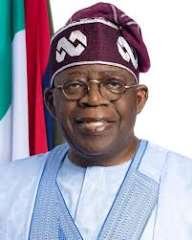
This is the difficult frontier upon which the presidency of Bola Ahmed Tinubu now stands.
If the earlier parts of this series examined the architecture of Tinubu’s political power, the strategic intelligence behind it, and the complex machinery that sustained his rise from Lagos politics to the centre of national authority, this phase demands a different inquiry. The question is no longer whether Tinubu understands power. The real question is whether political mastery can survive the burdens of difficult governance.
This is where reform politics begins.
Every serious reform government eventually encounters a painful dilemma: states cannot indefinitely postpone economic reality. Systems built on subsidies, borrowing, administrative leakages and structural inefficiencies eventually confront limits. The political challenge lies not merely in recognising these distortions, but in correcting them without rupturing democratic legitimacy.
Tinubu inherited such a moment.
Nigeria entered this phase burdened by fiscal pressure, mounting debt obligations, unstable exchange structures, subsidy distortions, energy constraints and declining public confidence in state capacity. Beneath the political arguments surrounding the present administration lies a more uncomfortable truth: successive governments delayed difficult adjustments while the structural weaknesses of the economy deepened.
The result was predictable.
The cost of reform increased with every year of postponement.
This explains why the present reform phase feels both economically disruptive and psychologically exhausting. The removal of fuel subsidy, the unification of exchange rates, revenue restructuring efforts and broader fiscal tightening were not isolated decisions. They represented an attempt—whether ultimately successful or not—to confront distortions that had accumulated over decades.
Yet reform, however economically rational, is never socially neutral.
Citizens do not experience policy through macroeconomic language. They experience it through transport fares, food prices, school fees, rent, electricity costs and shrinking purchasing power. Reform therefore ceases to be an abstract debate once it enters everyday life. It becomes emotional, immediate and deeply personal.
This is where the burden of governance becomes heavier than the burden of politics.
A politician may explain policy through statistics. Citizens measure it through survival.
This explains the tension now visible across the country. Inflationary pressures have weakened household stability. Small businesses struggle under rising operational costs. The middle class, already fragile before the reforms, faces increasing pressure from currency volatility and declining purchasing strength. For many Nigerians, economic reform feels less like transition and more like punishment.
This perception matters.
Democracies are not sustained by technical correctness alone. They depend equally on legitimacy, trust and the public belief that sacrifice has meaning.
This is why reform politics is among the most dangerous phases of democratic governance. Economic adjustment without social legitimacy can produce instability, anger and institutional distrust. Citizens may tolerate hardship temporarily, but they must believe that the hardship is purposeful, fairly distributed and leading somewhere.
Without that belief, reform loses moral authority.
This is the political risk confronting Tinubu.
The very qualities that made his political structure successful—coalition management, elite negotiation, strategic adaptability and system discipline—may now face their hardest test under conditions of prolonged social discomfort. Coalition systems function best under relative stability. Economic reform, however, generates disruption. It unsettles old arrangements, redistributes pressure and produces political anxiety even within governing structures themselves.
This contradiction is critical.
Can a political machine built on negotiation and strategic balance withstand the pressures created by painful economic restructuring?
That question remains unresolved.
Nigeria’s historical memory also complicates the reform environment. Citizens often approach economic reform with suspicion because previous adjustment periods produced unequal outcomes. The memory of Structural Adjustment Programme policies, the mixed consequences of past privatisation exercises and repeated promises of national sacrifice have left deep public distrust.
This distrust is not merely economic.
It is psychological. Many Nigerians believe the political elite routinely ask citizens to endure hardship while appearing insulated from its consequences. Whether entirely accurate or not, that perception shapes public reaction to reform. Where sacrifice appears unequal, legitimacy weakens.
This introduces a moral dimension to governance.
Economic reform is not judged solely by fiscal outcome. It is also judged by perceived fairness. Citizens observe not only the policy itself, but the conduct of leadership around it. They ask difficult questions:
Who bears the heaviest burden?
Is the political class equally restrained?
Are state institutions reducing waste?
Is there visible discipline at the top?
These questions matter because democratic endurance depends not only on economic adjustment, but on emotional legitimacy.
Pain without trust quickly becomes resentment.
This is where communication becomes central.
One of the recurring weaknesses of the Nigerian state has been its inability to explain reform in ways that create public ownership. Policies are often announced administratively but not morally defended. Governments speak the language of necessity while citizens ask for the language of direction.
People can endure sacrifice more easily when they understand where the nation is headed.
Where that direction appears unclear, uncertainty deepens.
The Tinubu administration therefore confronts not merely an economic challenge, but a narrative challenge. Reform must be seen not as isolated policy shocks, but as part of a coherent national reconstruction effort. Without such coherence, even sound economic decisions risk political exhaustion.
Yet there is an even larger question beneath the present moment.
Can Nigeria modernise democratically without painful restructuring?
This question extends beyond Tinubu himself. Every major state eventually confronts periods where accumulated distortions become unsustainable. The difficulty lies in balancing reform with democratic stability. Excessive caution prolongs decline. Excessive shock weakens legitimacy.
Successful reform governments therefore require more than policy courage.
They require sequencing, institutional trust and visible fairness.
This is where the issue of elite responsibility becomes unavoidable.
If reform is perceived as a burden carried primarily by ordinary citizens while political structures remain visibly extravagant, the moral foundation of adjustment weakens. Democratic sacrifice must appear nationally shared. Citizens are more likely to endure hardship where leadership projects restraint, discipline and accountability.
This principle is universal.
The legitimacy of reform depends partly on the credibility of those implementing it.
For Tinubu, this may ultimately become the defining test of his presidency. Political victories, coalition mastery and strategic intelligence established his rise. Governance, however, imposes a harsher standard. History judges presidents less by their ability to acquire power than by their capacity to use power in moments of national strain.
That judgment is still unfolding.
The burden of reform is therefore not merely economic. It is political, psychological and moral. Citizens can endure pain when they believe it is transitional, purposeful and collectively borne. What destroys democratic trust is not hardship alone, but hardship without visible national direction.
That is the difficult frontier upon which the Tinubu presidency now stands.
•Ogundipe, a public affairs analyst and former President of Nigeria and Africa Union of Journalists, writes from Abuja.