








United Nations agencies and health officials have intensified efforts to contain the Ebola outbreak in the Democratic Republic of Congo after violence erupted at a hospital treating infected patients in the country’s east.
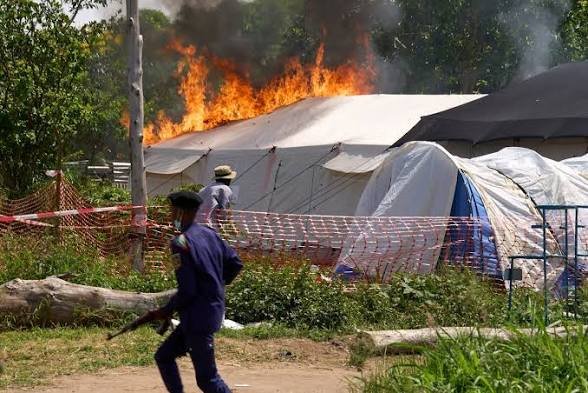
Tensions flared at Rwampara General Hospital near the city of Bunia in Ituri province when an angry crowd attacked the facility following the death of a young man suspected to have contracted Ebola.
According to local officials, family members and residents became enraged after authorities refused to release the victim’s body for burial due to strict health protocols aimed at preventing further transmission of the virus.
Witnesses said protesters hurled projectiles at the hospital and set fire to tents being used as Ebola isolation wards, forcing security forces to intervene.
Police reportedly fired warning shots to disperse the crowd, while medical workers were placed under military protection as authorities struggled to restore calm.
Health officials say the unrest underscores the growing challenges facing response teams as infections continue to spread across affected communities. Bodies of Ebola victims remain highly infectious, making safe burial procedures a key part of efforts to contain outbreaks.
In response to the worsening situation, the World Health Organization, UNICEF, and other humanitarian partners have expanded emergency operations in Congo.
The agencies are deploying additional medical supplies, protective equipment, sanitation materials, and rapid response teams to outbreak hotspots, while strengthening surveillance, treatment, vaccination campaigns, and contact tracing.
UNICEF said it is also increasing community engagement and public awareness campaigns to counter misinformation and encourage cooperation with health authorities, particularly among vulnerable families and children.
Aid agencies, however, warn that insecurity, public distrust, and logistical difficulties could hamper containment efforts in eastern Congo.
Health experts say sustained international support and community cooperation will be crucial to preventing the outbreak from escalating into a wider regional crisis.

UN intensifies efforts to contain Ebola as Congo nationals attack quarantine centres

Related Posts





Don't Miss


Stay informed with Breaking News Online in Nigeria on The News Bearer. Get real-time updates and analysis of national, international events.