










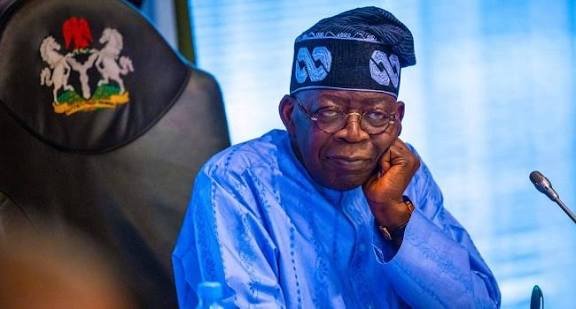
By Lanre Ogundipe
There comes a stage in the life of every consequential presidency when governance gradually escapes the immediacy of daily politics and begins entering the slower and more unforgiving territory of history. Headlines may still dominate the present. Political arguments may continue with intensity. Elections may remain in sight. Yet beneath the noise of contemporary events, another process quietly unfolds: the movement of power toward historical judgment.
This is the threshold now confronting President Bola Ahmed Tinubu.
If earlier phases of this series examined Tinubu as political strategist, coalition architect, reform-driven president and steward of difficult transition, the deeper question now emerging is no longer merely administrative or electoral. It is historical.
What ultimately becomes of leaders who attempt to reshape the direction of troubled states?
History asks questions differently from politics.
Politics rewards urgency, movement and survival. History examines consequence. Politics measures applause. History measures endurance. Political success may dominate a moment; historical significance depends on what survives beyond the moment.
This distinction is important because democratic societies often misunderstand power while it is still unfolding. Leaders are either celebrated too quickly or condemned too early. Yet the true meaning of presidencies frequently becomes clearer only after the emotional intensity of their era begins to settle.
Nigeria’s political history offers repeated examples of this tension.
Some leaders who once commanded enormous political influence gradually faded under historical scrutiny because their administrations left behind weak institutions or unresolved national fractures. Others who endured criticism during their tenure later acquired greater historical weight because aspects of their governance produced durable national consequences.
History is therefore rarely immediate.
It waits.
This waiting process complicates the presidency of Tinubu because his political rise was itself historically unusual. Few contemporary Nigerian politicians have exercised comparable influence across such an extended period of democratic transition. Fewer still moved from regional political architecture to national presidential authority while retaining such broad strategic reach within party structures and elite networks.
This alone ensures historical attention.
Yet attention does not automatically become legacy.
Power can command relevance in the present without securing permanence in history. The two are not identical.
This is where the burden confronting Tinubu grows heavier.
The earlier years of political struggle rewarded adaptability, coalition management and tactical intelligence. The presidency demands something more difficult: the conversion of political power into national direction under conditions of public distrust, economic strain and institutional fragility.
That conversion remains unfinished.
The challenge is intensified by Nigeria’s peculiar democratic psychology. Nigerians simultaneously demand reform and resist prolonged sacrifice. Citizens desire transformation but often distrust the political institutions expected to implement it. The state itself suffers from accumulated credibility deficits created over decades of inconsistent governance, elite impunity and broken public expectations.
Under such circumstances, leadership becomes extraordinarily difficult.
Every policy decision is interpreted through competing fears. Economic reforms trigger suspicion. Institutional restructuring creates anxiety. Citizens measuring hardship through daily survival naturally become impatient with governments promising future stability while present discomfort deepens.
This creates a dangerous democratic contradiction.
The reforms necessary to strengthen states often generate temporary instability before producing visible outcomes. Yet democratic societies reward immediate relief more easily than long-term restructuring.
This is why transformational presidencies are frequently misunderstood while they are still unfolding.
History itself contains many examples of leaders whose most consequential decisions were resisted during their own time. Political societies are rarely patient with transition. Citizens living through difficult reforms often judge leadership through immediate survival rather than future institutional outcome. Nations enduring inflation, uncertainty or restructuring naturally become emotionally impatient with governments asking them to sacrifice in the name of future stability.
This is not unique to Nigeria.
But Nigeria’s historical experience deepens the distrust.
Repeated cycles of unfulfilled promises, uneven development and elite excess have weakened the emotional relationship between citizens and the state. Many Nigerians no longer interpret reform as collective national transition. They interpret it as another episode in a familiar cycle where ordinary citizens absorb pain while elite structures remain protected from consequence.
This perception may not always capture the full complexity of governance, but politically it is enormously powerful.
Because democratic legitimacy depends not only on policy, but also on trust.
Citizens endure sacrifice more willingly where leadership projects restraint, fairness and moral credibility.
Populations struggling under economic pressure observe government not merely through policy announcements, but through visible conduct. They ask difficult questions:
Is sacrifice genuinely collective?
Are institutions becoming more disciplined?
Is leadership conscious of public suffering?
Are reforms producing visible movement?
Without convincing answers to such questions, even economically rational policies risk emotional rejection.
This is where power begins to encounter history at a deeper level.
History judges leadership morally as well as administratively.
It asks not only whether governments governed, but how they governed. Whether power expanded institutions or personalised them. Whether reform strengthened citizenship or deepened alienation. Whether authority ultimately served the republic or merely protected itself.
These are difficult questions because they extend beyond politics into the moral psychology of statecraft.
The problem becomes even more complicated where political structures appear deeply personalised. One of the enduring questions surrounding Tinubu’s rise concerns whether his political system represents merely the consolidation of strategic influence or the construction of durable democratic architecture capable of surviving beyond personality.
This distinction is crucial.
Some leaders dominate politics without strengthening institutions. Others build systems that outlive them. History tends to distinguish sharply between the two.
This is where Tinubu’s presidency now approaches its defining intersection.
Will his years in power ultimately deepen institutional resilience or reinforce dependency on political centralisation?
Will coalition management evolve into stable democratic architecture?
Will painful reforms produce stronger national capacity or deepen public alienation from the state?
Will governance leave behind structures stronger than personalities?
These are no longer campaign questions.
They are historical questions.
This is why the presidency can become profoundly isolating.
Power often appears strongest from a distance. Yet at the highest levels of governance, certainty becomes increasingly fragile. Leaders must navigate competing pressures from political allies, economic actors, party expectations, public frustration and historical anxiety simultaneously.
The presidency becomes less an office of comfort than a continuous negotiation with consequence.
This is the hidden loneliness of consequential power.
For Tinubu, the historical pressure is intensified by the scale of expectation surrounding his presidency. Long before assuming office, he had already acquired the reputation of strategic architect, political organiser and power broker within Nigeria’s democratic system. Such reputations inevitably raise the standard by which governance itself is judged.
The expectations become larger than administration.
They become historical.
This explains why the present moment feels heavier than ordinary political transition. The issue is no longer merely whether Tinubu governs successfully in the immediate sense. The deeper question is whether his presidency will eventually be interpreted as a turning point in the evolution of the Nigerian state.
History rarely answers such questions quickly.
It measures slowly.
It studies what survives.
It examines whether institutions strengthened or weakened, whether reforms produced resilience or exhaustion, whether leadership expanded democratic confidence or narrowed it.
Above all, history asks whether power ultimately served something larger than itself.
That is the threshold now approaching.
And for every presidency, there comes a moment when the struggle is no longer against opposition parties, electoral rivals or public criticism.
The final struggle becomes the attempt to secure a place within the longer memory of the republic.
That is where politics begins to fade.
And history quietly takes over.
And perhaps that is where this public conversation must momentarily pause—at the delicate intersection where politics begins to surrender itself to history. Yet the deeper questions remain unfinished.
The concluding movements of The Tinubu Enigma, together with the broader philosophical transition into what may eventually be understood as Tinubuism, will continue within the forthcoming book edition of this series.
•Lanre Ogundipe, a public affairs analyst and former President, Nigeria and Africa Union of Journalists, writes from Abuja.