



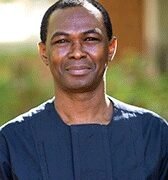









Professor Akin Ogundiran of Northwestern University, United States, has called on Nigerian universities to take leading roles in shaping Africa’s future by developing homegrown knowledge, embracing technology and addressing emerging global challenges.
Ogundiran made the call ahead of the inauguration of Professor Peter Olamakinde Olapegba as the 14th Vice-Chancellor of the University of Ibadan (UI), scheduled for November 2 at the institution’s historic Trenchard Hall.
In his inauguration lecture titled “The African University in a New World Order: Imperatives of Knowledge Sovereignty and Relevance,” Ogundiran said Nigerian universities must move beyond producing graduates to becoming active contributors to global knowledge and development.
He identified geopolitical shifts, artificial intelligence, population growth and climate change as major forces reshaping the world, warning that Nigerian universities could not afford to remain spectators to these developments.
The professor of History, who is also a UI alumnus, described Olapegba’s academic journey as an example of the transformative power of universities, noting that he rose from working as a sales clerk in Lagos to becoming a professor and university administrator.
According to him, Olapegba’s career demonstrates that universities must identify and nurture talents regardless of their backgrounds, providing opportunities for individuals to achieve their full potential.
Ogundiran also highlighted Olapegba’s research contributions in psychology, particularly his emphasis on developing culturally relevant research instruments and theories suited to Nigerian and African realities.
He said knowledge sovereignty did not mean intellectual isolation but the ability of African institutions to generate reliable knowledge, develop research infrastructure and participate in international partnerships as equal contributors.
The don urged universities to embrace interdisciplinary education, arguing that complex challenges such as environmental degradation, flooding and food insecurity required collaboration across different academic disciplines.
On artificial intelligence, he urged Nigerian universities to promote AI literacy, invest in Nigerian-language resources and digital archives, and establish ethical standards, stressing that the goal should be to make artificial intelligence relevant to African languages, histories and social realities.
He further called for stronger funding partnerships involving government, industry, philanthropists, alumni and communities to support research, scholarships, laboratories and academic development.
Ogundiran cited his establishment of an annual postgraduate research grant in honour of one of his former teachers, Professor Babatunde Agbaje-Williams, as an example of how alumni could contribute to strengthening their former institutions.
He said the University of Ibadan and other African universities must not merely adapt to a future designed elsewhere but develop the intellectual capacity to help shape that future.