












By Akin Ogundiran
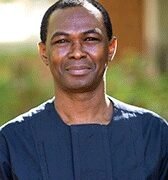
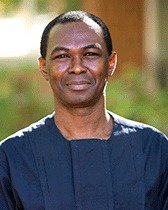
On November 2 at 2:00 pm, Nigeria’s oldest university, the University of Ibadan, will inaugurate Professor Peter Olamakinde Olapegba as its 14th Vice-Chancellor at the historic Trenchard Hall. For me, returning to my alma mater to deliver the inauguration lecture, the first in the history of the 78-year old institution, is both a personal privilege and an opportunity to reflect on a larger question: What must Nigeria expect from its universities at a time of profound global change?
My lecture, titled “The African University in a New World Order: Imperatives of Knowledge Sovereignty and Relevance,” will treat the inauguration as more than a ceremonial transfer of office. Universities everywhere are being confronted by major disruptions: geopolitical power is becoming more multipolar; artificial intelligence is changing how knowledge is produced; demographic change is shifting much of the world’s future population growth toward Africa; and climate change is reshaping food production, health, migration, cities, and livelihoods. Nigerian universities cannot remain spectators to these transformations.
Olapegba’s own journey offers an appropriate starting point. Before entering the University of Ibadan to study Psychology in 1992, he spent six years working as a sales clerk in Oke Arin, Market, Lagos. He earned his bachelor’s degree in 1997 and master’s degree in 1999 before joining UI as an Assistant Lecturer in June 2000. He subsequently rose through the academic and administrative ranks, serving as Dean of the Faculty of the Social Sciences and, most recently, Deputy Vice-Chancellor for Administration.
His story illustrates one of the university’s most important social functions. Talent is widely distributed; opportunity is not. A student may arrive late, without wealth or influential connections, and still develop into a scholar, professor, administrator and institutional leader. Universities build people. Eventually, the people they build are called upon to build universities.
This is especially important in Nigeria, where millions of young people confront uncertainty about education, employment and social mobility. The circumstances of one’s beginning should not determine the limits of one’s future. A university worthy of the name should discover talent, develop it, challenge it and create the conditions in which human possibility can flourish.
Author/co-author of more than 130 scholarly works, Olapegba’s scholarship also speaks to a larger issue. His research has addressed questions including quality of life, HIV/AIDS, sexual behaviour, domestic violence, environmental psychology and culturally relevant psychological measurements. He has insisted in all his experiments, research, and publications that psychological measurements must be developed specifically for African cultural settings with emphasis on Nigeria. In other words, whether he’s studying widows in Enugu, mental illness in Ibadan, or youth sexual behavior on university campuses, Professor Olapegba is always keen to ensure the psychological instruments and theories he uses are culturally validated before applying them to Nigerian populations.
His work reminds us that Nigerian realities must not simply provide data for theories created elsewhere; they should also generate questions, theories, concepts, and methods.
That is what I mean by knowledge sovereignty.
Knowledge sovereignty does not mean intellectual isolation or rejection of international collaboration. It means possessing the capacity to identify important questions, generate reliable knowledge, control essential research and data infrastructure, sustain strong publishing institutions, and enter global partnerships as an intellectual equal. It means learning from others without abandoning our responsibility to think for ourselves.
This matters even more in a changing geopolitical order. Nigeria now engages not only its traditional Western partners but also China, India, Brazil, the Gulf states, and other emerging powers. More partners may create more options, but options do not automatically produce bargaining power. A country must understand what it owns, what it needs and what alternatives are available.
Universities should therefore be regarded as part of Nigeria’s strategic infrastructure, alongside energy systems, transportation networks and telecommunications.
Demographic change gives this argument particular urgency. Africa’s young population can become an enormous economic advantage, but population alone does not produce prosperity. Universities must help convert population into capability and capability into productivity. Graduates need more than certificates. They need critical thinking, technological competence, communication skills, entrepreneurship, financial literacy and experience solving real problems.
One way to achieve this is through interdisciplinary education. Imagine students from Zoology, Botany, Geology, Geography, History, Archaeology, Educational Leadership and Business Administration working together to restore a degraded watershed in Ibadan. Some would study biodiversity, vegetation, soils, erosion and land use. Others would reconstruct the environmental history of the landscape, organize community participation, and develop financing and management plans. The lesson would be simple: real problems do not arrive neatly labeled “Zoology,” “Geography,” “Business Administration,” or “History.” Universities must increasingly organize knowledge around problems rather than administrative boundaries.
Artificial intelligence presents another test. Nigerian universities should neither fear AI nor adopt it uncritically. AI literacy should spread across the curriculum. Universities should invest in Nigerian-language resources, digital archives, shared computing capacity and ethical standards for AI use. The goal should not merely be to make Nigerian universities AI-ready, but to help make AI Africa-ready—capable of understanding our languages, histories, environments, and social realities.
Climate change demands the same intellectual breadth. Flooding, extreme heat, erosion and changing rainfall already affect Nigerian agriculture, health, infrastructure and household economies. Universities should help government and communities move from crisis response toward anticipation: better environmental data, early-warning systems, climate-resilient agriculture, improved urban planning and locally grounded adaptation strategies.
None of these ambitions can be sustained by government funding alone. Government must remain a major funder of public higher education, but universities also need stronger partnerships with industry, philanthropy, alumni and communities. Research endowments, endowed professorships, scholarships, laboratories, startup support and competitive research grants should become normal parts of the funding ecosystem.
Six years ago, I established an annual postgraduate research grant in honour of Professor Babatunde Agbaje-Williams, one of my teachers. It is a modest example, but the principle matters: alumni should reinvest in the institutions and people that helped form them.
Olapegba’s inauguration therefore invites us to see the University of Ibadan as more than an institution that awards degrees. Its classrooms, laboratories, libraries, and archives contribute to Nigeria’s capacity to understand itself and respond intelligently to change.
The challenge before the new Vice-Chancellor—and before all of us—is to strengthen that capacity.
African universities must not simply adjust to a future designed elsewhere.
They must help design it.
•Ogundiran is a Professor of History and Cardiss Collins Professor of Arts and Sciences, Northwestern University, Evanston, USA.