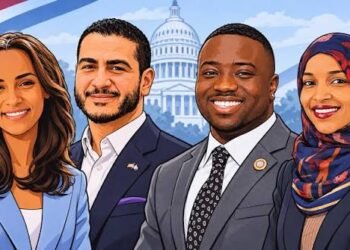












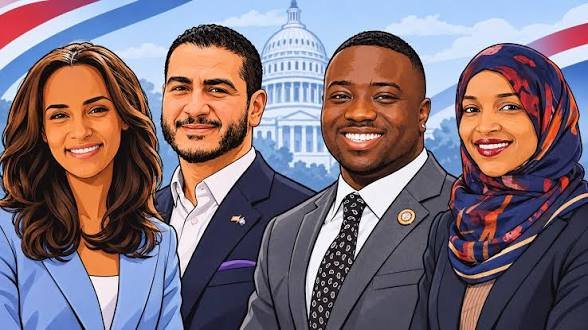
A new generation of politicians of African descent is making its mark on American politics, following historic victories in the 2026 US midterm elections, with candidates of Nigerian, Ghanaian, Ethiopian and Egyptian heritage securing significant political positions.
According to the BBC, from the US Senate to the House of Representatives and state legislatures, their victories reflect the growing influence of immigrant communities and younger politicians in the country’s political landscape.
Among the prominent winners is 42-year-old Abdul El-Sayed, a Democrat of Egyptian descent, who won a Senate seat in Michigan, making history as the first Muslim to be elected to the United States Senate.
Born to Egyptian immigrant parents, El-Sayed faced a controversial campaign marked by attacks from conservative media and President Donald Trump, who accused him of supporting the Muslim Brotherhood.
He rejected the allegations and maintained his focus on healthcare, affordable housing and reducing corporate influence in politics.
At his victory rally, El-Sayed attracted attention when he addressed Vice-President JD Vance with the Arabic expression, “JD, habibi”, meaning “JD, my love”.
The former public health administrator ran a social media-driven campaign that appealed particularly to younger voters, using TikTok videos, humour and friendship bracelets to connect with supporters.
His campaign also advocated Medicare for All and an end to US military assistance to Israel.
Another historic winner was 29-year-old Melat Kiros, who became the first Generation Z woman elected to the US Congress.
Born in Addis Ababa, Ethiopia, Kiros moved to the United States as a baby and grew up in Denver, Colorado.
Despite having no previous experience in elected office, she defeated a 15-term incumbent in the Democratic primary before securing victory in the general election.
Her campaign focused on issues including the rising cost of living, universal childcare and accessible healthcare.
Endorsed by the Democratic Socialists of America, Kiros also advocated abolishing Immigration and Customs Enforcement and ending American military assistance to Israel.
However, her political activism has attracted controversy, particularly over her criticism of Israel’s military operations in Gaza.
She has maintained that her criticism is directed at the Israeli government and not Jewish people.
Kiros’ journey into politics reportedly became more pronounced after she was dismissed by a prominent New York law firm in 2023 following her refusal to withdraw an open letter addressing the treatment of pro-Palestinian campus protests and concerns about antisemitism.
Meanwhile, 32-year-old Adrian Boafo, whose parents emigrated from Ghana, has secured a seat in the House of Representatives, representing Maryland’s 5th Congressional District.
Boafo, a second-generation Ghanaian-American born in Virginia and raised in Maryland, succeeds veteran Democratic Congressman Steny Hoyer, who is retiring after more than four decades in public service.
His political journey began at the local level, where he served on the Bowie City Council before becoming a Maryland state delegate in 2023.
He also worked for Hoyer before emerging as his successor.
Boafo’s campaign prioritised the cost of living, childcare and protecting federal workers, issues of particular importance in his constituency, which is close to Washington, DC, and has a significant population of government employees.
In his victory statement, he said representing his constituents had never felt more urgent, citing federal job losses, rising living costs and the Trump administration’s immigration policies.
Another African-born politician retaining her place in Congress is Somali-American Ilhan Omar, who won a fifth term as representative of Minnesota’s 5th Congressional District.
The 44-year-old, who first entered Congress in 2018, remains one of the most prominent African immigrant voices in American politics.
She made history as the first Somali-American elected to Congress and one of the first Muslim women to serve in the chamber.
Her latest victory came amid renewed political scrutiny, including an ongoing federal investigation into her immigration paperwork.
Federal agents searched her Washington home in October, although she has denied wrongdoing and has not been charged with any crime.
Beyond the federal legislature, politicians of African descent also recorded notable breakthroughs in state and local elections.
In Texas, 27-year-old Nigerian-born Junior Ezeonu, who moved to the United States as a young child, won election to the Texas State House after previously becoming the youngest city council member in Grand Prairie.
Similarly, 34-year-old Carol Kazeem, a Pennsylvania state legislator of Nigerian heritage, retained her seat representing District 159.
At least four candidates of Nigerian descent reportedly emerged victorious in the November 3 midterm elections, further highlighting the growing participation of Nigerians and their descendants in American public life.
A source of inspiration for Africa
Beyond their significance in American politics, the victories have generated conversations across Africa about political participation, youth leadership and the influence of diaspora communities.
Social media users, particularly in Nigeria and Kenya, have celebrated the emergence of young politicians with African roots, describing their achievements as an inspiration for a new generation of political leaders on the continent.
The development comes as both countries prepare for major elections in 2027, amid continuing demands for greater youth representation, accountability and inclusive governance.
Although the politicians were elected within the American political system and primarily campaigned on domestic issues, their backgrounds have given their victories an additional significance for many Africans.
Their emergence demonstrates how people from immigrant families can rise through local political institutions to occupy influential positions in their adopted country.
From El-Sayed’s historic Senate victory to Kiros’ breakthrough as a Gen Z congresswoman and Boafo’s entry into the House of Representatives, the 2026 midterms have provided a remarkable showcase of the growing political visibility of Americans with African roots.
For young Africans watching from across the Atlantic, the message may extend beyond electoral victories: political participation, representation and leadership can begin at the grassroots and develop into national influence.