












Nigeria’s struggle with electricity supply has persisted for decades, leaving households, businesses and industries at the mercy of an unreliable national grid.
From frequent power outages to rising electricity tariffs and the high cost of running petrol and diesel generators, the country’s energy crisis continues to undermine economic productivity and the quality of life of millions of people.
But thousands of kilometres away, Pakistan is offering an important lesson in how citizens can take greater control of their electricity needs through renewable energy.
The Asian country is experiencing a remarkable solar power revolution, with households, farmers, hospitals and industrial establishments increasingly turning to solar energy to escape soaring electricity bills and unreliable public power supply.
According to Pakistan-based energy think tank, Renewables First, the proportion of electricity generated from solar energy in the country increased from just one per cent in 2018 to 28 per cent in 2025. An estimated seven million households now own solar panels.
The development is particularly significant because the transformation was driven largely by ordinary citizens and businesses rather than an elaborate government-led programme.
For Nigeria, where millions of households spend substantial portions of their income on alternative electricity sources, Pakistan’s experience raises an important question: What would happen if solar energy became more accessible, affordable and widely adopted across the country?
Citizens taking charge of electricity supply
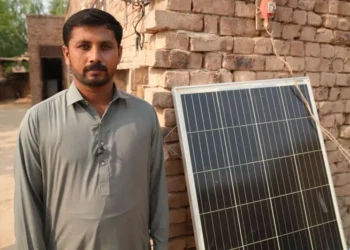
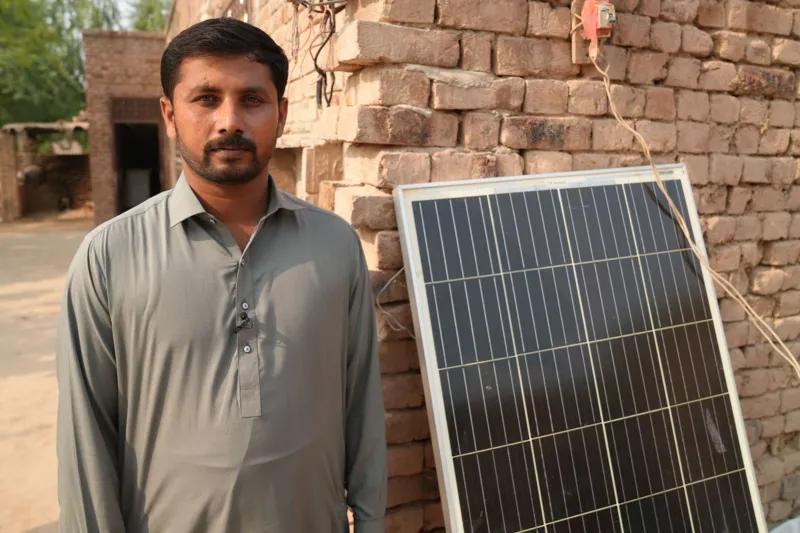
In rural Punjab, Pakistan, solar panels have become more than just an alternative source of electricity. They are increasingly regarded as essential household possessions.
Faisal Shahzad, a newly married resident, considers a 340-watt solar panel among the most valuable gifts he received from his wife’s family.
During the summer, he explained, the panel supplied enough electricity to operate an air cooler throughout the day without relying on the national grid.
The growing popularity of solar energy has even influenced wedding traditions, with some families now presenting solar panels and air coolers as wedding gifts instead of conventional household items.
The attraction is understandable. Pakistanis have been confronted with electricity bills that have become increasingly difficult to afford, while the cost of solar panels has declined considerably.
Muhammad Hassan Dajana, an industry liaison officer at Renewables First, said electricity tariffs had more than doubled within a few years, while the cost of Chinese solar panels had fallen by 93 per cent.
The experience demonstrates how falling technology costs, combined with the need to escape expensive and unreliable electricity, can accelerate the adoption of renewable energy.
Nigeria faces similar circumstances. Many households and businesses already spend heavily on petrol and diesel generators, fuel, generator maintenance and electricity tariffs.
For small businesses, particularly barbershops, restaurants, cold-room operators, tailors, supermarkets and technology entrepreneurs, the cost of keeping operations running can significantly reduce profit margins.
A wider transition to solar energy could help reduce these expenses, improve business continuity and free up resources for expansion and employment.
Solar energy as an economic opportunity
Perhaps one of the most important lessons from Pakistan is that solar energy should not be viewed exclusively as an environmental intervention. It is also an economic development opportunity.
At Kohinoor Textiles Mills in Islamabad, hundreds of industrial machines are powered by an extensive installation of solar panels.
The company’s utilities manager, Sabawoon Khan, explained that when sunlight is available, the factory can operate entirely on solar electricity. Its heavy-fuel-oil engines, previously used to generate power, have been taken out of regular service.
The company is also preparing to introduce industrial batteries to store excess electricity for use when sunlight is unavailable.
Its chief executive, Taufique Sayeed Saigol, said reducing energy costs was a major motivation for the investment.
This example offers an important lesson for Nigerian manufacturers, whose competitiveness is frequently affected by the cost of electricity generation.
Nigeria’s industrial sector depends heavily on alternative power sources because of inadequate and inconsistent grid supply. Manufacturers often operate diesel-powered generators, increasing production costs and making locally manufactured products more expensive.
If more factories, industrial estates and small businesses invested in solar installations supported by battery storage, they could reduce their dependence on fossil fuels, improve production efficiency and become more competitive.
Government incentives, affordable financing and partnerships with private energy providers could make such investments more accessible, particularly to small and medium-sized enterprises.
The Nigerian opportunity
Nigeria possesses considerable solar energy potential, yet the country has not fully translated this natural advantage into widespread access to affordable electricity.
Its electricity challenges are also different in important respects from Pakistan’s. Nigeria must address not only the cost of electricity but also limited grid coverage, inadequate transmission and distribution infrastructure, poor reliability and the financial difficulties confronting the electricity market.
Consequently, copying Pakistan’s experience without adapting it to local circumstances would be inadequate.
Nevertheless, several practical lessons stand out.
First, Nigeria needs to make solar technology more affordable. Although solar adoption is increasing, the initial cost of purchasing panels, inverters and batteries remains beyond the reach of many low-income households.
The government could expand financing arrangements through development banks, commercial banks, microfinance institutions and renewable energy companies. Flexible payment plans would enable households to acquire solar systems and pay gradually from savings on electricity and generator expenses.
Second, Nigeria should encourage local solar manufacturing and assembly. Heavy dependence on imported panels, batteries and other components exposes the renewable energy market to foreign exchange fluctuations, import costs and supply-chain disruptions.
Supporting local manufacturing, technical training and research could create employment opportunities while reducing the cost of renewable energy equipment over time.
Third, solar adoption should extend beyond individual households. Public schools, hospitals, universities, markets, government offices and rural health centres could benefit from properly designed solar installations.
Reliable electricity in hospitals, for example, could support refrigeration of vaccines, diagnostic equipment, emergency services and other essential medical operations.
Similarly, rural communities could use solar-powered mini-grids to support agricultural processing, irrigation, cold storage and small businesses.
Such interventions would make renewable energy an instrument of social and economic development rather than simply a means of reducing household electricity bills.
Avoiding Pakistan’s electricity trap
However, Pakistan’s experience also offers a warning that Nigeria must not ignore.
The rapid adoption of solar energy has created new challenges for the country’s national electricity grid.
As more households and businesses generate their own electricity, they purchase less power from the public grid. This reduces the revenue available to maintain the existing infrastructure and meet fixed operational costs.
Energy experts describe the potential consequence as a utility death spiral.
When fewer consumers purchase electricity from the grid, the remaining customers may be required to pay higher tariffs to sustain the system. Higher electricity bills could then encourage even more consumers to abandon grid electricity.
The result could be a divided energy system in which wealthier households and businesses enjoy relatively reliable electricity through privately installed solar systems, while poorer consumers remain dependent on an increasingly expensive public grid.
Pakistan’s Energy Minister, Awais Ahmad Leghari, said the departure of consumers from the grid had cost other electricity users more than $500m annually over the preceding two years.
The government has consequently been working to improve grid efficiency, reduce waste, introduce better energy storage and renegotiate expensive power-generation contracts.
Another contentious issue has been its revision of the arrangements through which solar electricity producers could supply excess electricity to the grid in exchange for credits.
The experience highlights the importance of developing clear and predictable renewable energy policies.
For Nigeria, the lesson is that solar expansion must complement, rather than undermine, the development of a reliable national electricity network.
The government should establish transparent regulations governing electricity generated by households and businesses, including arrangements for feeding surplus electricity into the grid.
It must also ensure that electricity distribution companies, independent power producers and renewable energy providers operate within a framework that protects consumers while encouraging investment.
Building a solar-powered future
Pakistan’s experience demonstrates that citizens do not necessarily have to wait for governments to resolve every electricity challenge before embracing alternative energy solutions.
However, individual investments alone cannot deliver a sustainable national energy transition.
Nigeria needs a coordinated approach that brings together government institutions, private investors, financial organisations, manufacturers, electricity distribution companies and ordinary consumers.
The country should also prioritise battery storage technology, because solar panels cannot independently guarantee uninterrupted electricity supply at night or during extended periods of poor sunlight.
Investment in battery technology, mini-grids and modern transmission infrastructure would help ensure that renewable energy contributes to a more dependable electricity system.
There is also a need to develop technical expertise in solar installation, maintenance and energy management. As adoption increases, trained technicians and engineers will be essential to sustaining the industry and creating employment opportunities for young Nigerians.
Pakistan is now pursuing an ambitious target of generating up to 90 per cent of its electricity from clean sources by the end of 2036, including renewable energy and nuclear power.
Whether it achieves that objective remains to be seen. Its solar revolution, however, has already demonstrated the economic possibilities of allowing households and businesses to participate directly in the energy transition.
For Nigeria, the message is clear: solar energy should not be treated as a luxury for wealthy households or a temporary response to electricity outages.
It should become an integral part of the country’s long-term energy security, industrial development and poverty-reduction strategies.
But the ultimate objective should not be to replace one unreliable electricity arrangement with millions of disconnected private systems.
Rather, Nigeria should build an energy system in which affordable solar power, battery storage, mini-grids and a modern national grid work together to deliver reliable electricity to everyone.
Pakistan’s experience offers both an inspiration and a cautionary tale. Nigeria’s challenge is to learn from both before its own energy transition gathers even greater momentum.