











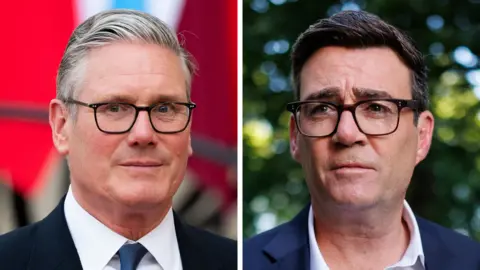
LONDON — Andy Burnham is set to become the United Kingdom’s new prime minister on Monday, replacing Keir Starmer after a dramatic period of political upheaval that will leave Britain with its fifth prime minister in just four years.
Burnham, who became Labour leader on Friday after facing no opposition from fellow MPs, will formally take office following a visit to Buckingham Palace, where King Charles III is expected to invite him to form a government. Earlier in the day, Starmer will deliver a final address before formally tendering his resignation.
According to the BBC, the transition marks the culmination of a turbulent few months for the Labour Party. Starmer announced his intention to step down in June following disappointing election performances by Labour in England, Scotland and Wales.
Burnham, the former mayor of Greater Manchester, quickly emerged as the uncontested successor, securing overwhelming support from Labour MPs.
In his first speech outside 10 Downing Street, Burnham is expected to acknowledge growing public frustration with political instability and promise a new era of steady leadership.
According to advance excerpts, he will argue that Britain needs “more breathing room” and a renewed sense of confidence in government.
Burnham is expected to tell the nation that he is “acutely conscious” of the rapid turnover of leaders in recent years and will frame his premiership as an opportunity for reflection, stability and practical reform.
He is also expected to outline plans aimed at improving living standards and restoring trust in public institutions.
Speaking ahead of his appointment, Burnham said the country needed a different approach after what he described as a decade in which existing policies had failed to deliver lasting results.
He pledged to pursue a long-term economic strategy while cautioning that meaningful change would take time.
“To be clear to people, it can’t be done overnight,” Burnham said in an interview published before his arrival in Downing Street. “But you’ve got to show people where we’re going, and then the steps towards it.”
Opposition parties have reacted cautiously to the change in leadership. Conservative leader Kemi Badenoch congratulated Burnham and wished him success in office, but questioned whether he had presented a clear programme for government.
In an open letter, Badenoch accused the incoming prime minister of avoiding detailed scrutiny and warned that he was entering office without a comprehensive plan.
She also urged him to rule out tax increases and reverse restrictions on new oil and gas licences, while offering Conservative support for measures aimed at reducing welfare spending.
Burnham’s rise to the country’s highest office has been swift.
Having only recently returned to Parliament, he now assumes leadership of a government facing economic pressures, public service challenges and growing demands for political stability.
No general election is required for the transition. Under the UK’s parliamentary system, a governing party can replace its leader without seeking a new national vote, provided it maintains the confidence of the House of Commons. The next general election is not legally required until 2029.
As Burnham prepares to enter Downing Street, attention is already turning to the composition of his Cabinet and the policies that will define his administration. He has indicated that discussions on ministerial appointments are still ongoing.
By the end of the day, Britain will have a new prime minister, and Burnham will face the task of convincing voters that his government can bring stability after years of political turbulence.

Andy Burnham set to become UK Prime Minister as Starmer exits Downing Street

Related Posts












Stay informed with Breaking News Online in Nigeria on The News Bearer. Get real-time updates and analysis of national, international events.