











The Democratic Republic of Congo (DRC) has recorded more than 2,000 deaths from an outbreak of the Bundibugyo strain of Ebola, raising fears that the epidemic could become the country’s largest on record, DW has reported.
Health authorities said on Tuesday that more than 4,380 infections have been confirmed since the first case was detected, with the virus spreading rapidly across eastern and northeastern parts of the country.
The outbreak, officially declared on May 15, is the 17th Ebola outbreak recorded in the DRC.
According to officials, the current outbreak is proving deadlier than previous epidemics, with a case fatality rate of 45.9 per cent.
The death toll has doubled from 1,000 to over 2,000 within three weeks, highlighting the accelerating pace of transmission.
Gavi, the global vaccine alliance, warned that the outbreak could become the largest ever recorded in the country.
The previous worst outbreak in the DRC occurred between 2018 and 2020, when about 3,500 infections resulted in 2,300 deaths.
Health Minister Samuel Roger Kamba said authorities had not yet reached the peak of the outbreak but expressed optimism that the spread could be brought under control within the next three months.
Efforts to contain the disease have been complicated by insecurity, poor road networks, healthcare worker strikes and population displacement caused by ongoing conflict.
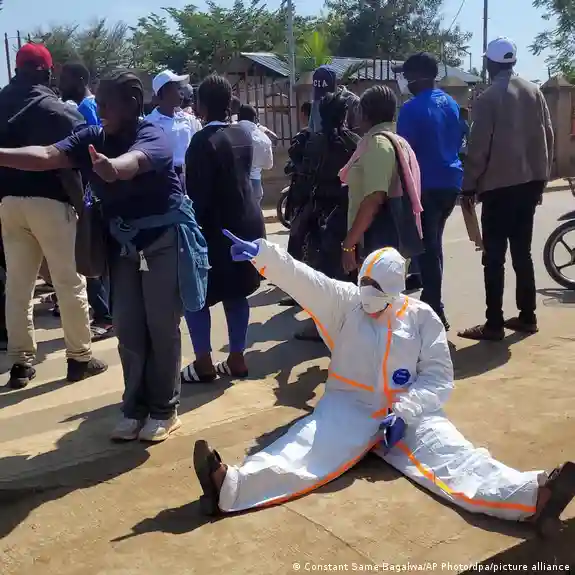
Authorities have imposed restrictions on public gatherings and closed the airport in Ituri Province, the epicentre of the outbreak.
The World Health Organization has warned that health officials are struggling to keep pace with the virus, particularly because no approved vaccine currently exists for the Bundibugyo strain.
However, clinical trials involving antiviral treatments are underway, while the WHO has recommended large-scale testing of the Ervebo vaccine, which has previously been effective against the Zaire strain of Ebola.
Researchers recently suggested that the outbreak may have begun earlier than previously thought, possibly as far back as February, following an animal-to-human transmission event before spreading between people.
Ebola, a severe haemorrhagic fever transmitted through contact with infected bodily fluids, has claimed more than 15,000 lives across Africa over the past five decades.

Ebola death toll tops 2,000 in DR Congo as outbreak intensifies

Related Posts









Don't Miss



Stay informed with Breaking News Online in Nigeria on The News Bearer. Get real-time updates and analysis of national, international events.