










The Inspector-General of Police, Olatunji Rilwan Disu has directed senior officers to lead by example, enforce discipline decisively, and uphold the highest ethical and professional standards at all times.
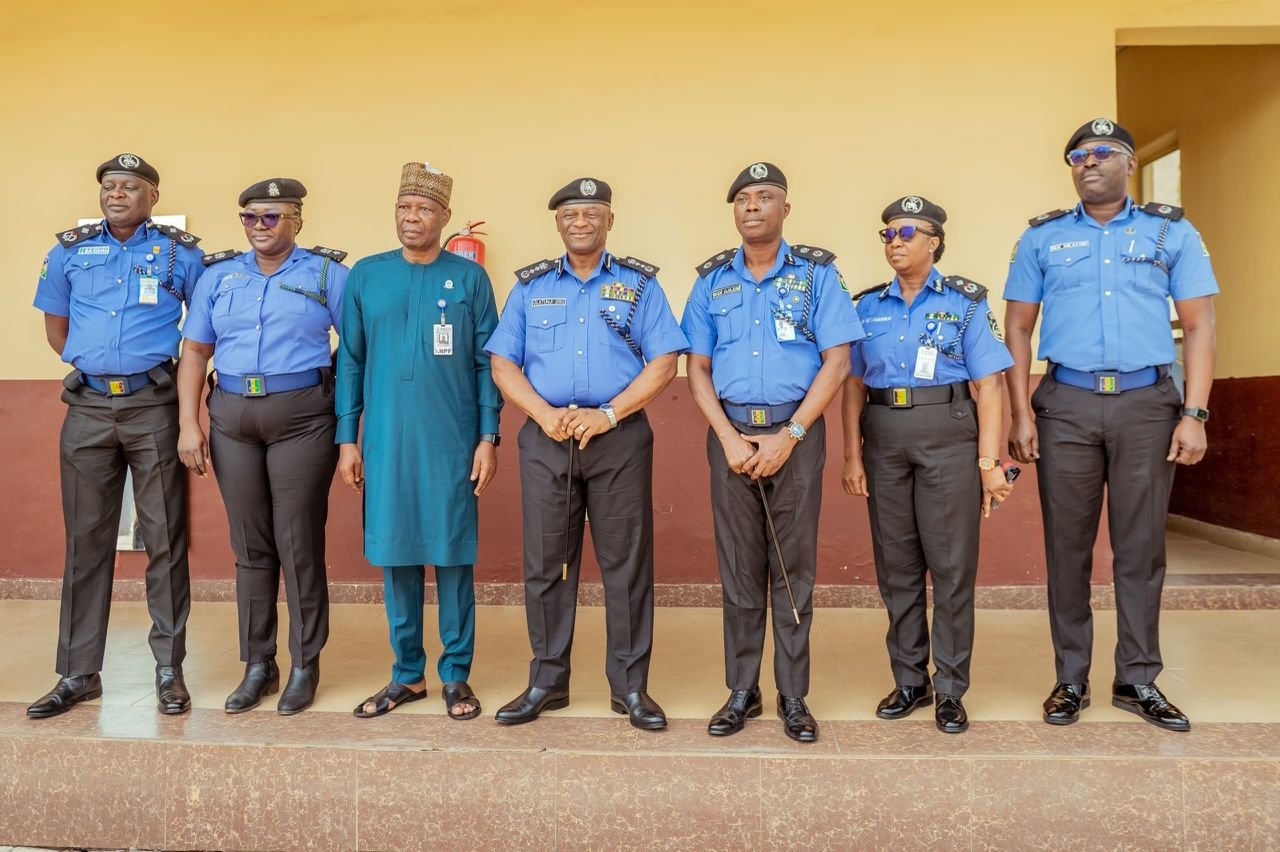
The IGP said this on Wednesday, March 4, at his inaugural conference with senior police officers at the Peacekeeping Conference Centre, Force Headquarters, Abuja, bringing together strategic managers of the Nigeria Police Force for high-level deliberations on institutional priorities and national security imperatives.
He also announced the strengthening and revitalisation of internal accountability mechanisms, including the Complaints Response Unit and the X-Squad, to ensure that no officer acts above and outside the law.
The conference, which marked the first official strategic engagement between the Inspector-General of Police and senior leadership cadre of the Nigeria Police Force since his assumption of office, is designed to align operational directives, reinforce command responsibility, and set clear performance benchmarks for his administration.
During the conference, IGP Tunji Disu also formally inaugurated the Steering Committee on the Establishment of State Police.
The Steering Committee comprises the chairman, Prof. Olu Ogunsakin, who is the Director General of the National Institute for Police Strategic Studies (NIPSS), Jabi, Abuja; the Secretary, CP Bode Ojajuni; DCP Okebechi Agora; DCP Suleyman Gulma; ACP Ikechukwu Okafor; CSP Tolulope Ipinmisho and CP Emmanuel Ojukwu, (rtd), who is also the Provost, Police Public Relations School.
In his opening address,
The IGP reiterated his commitment to intelligence-led, evidence-based, and technology-driven policing, supported by improved coordination, enhanced intelligence architecture, and investment in modern investigative tools.
Describing the steering committee’s assignment as both significant and timely in light of evolving security challenges across the federation, the IGP noted that the concept of state police is being carefully examined as part of broader national efforts to improve security governance, bring policing closer to the people, and deepen community participation in crime prevention.
The committee is mandated to review existing policing models within and outside Nigeria, assess community security needs and emerging risks, propose an operational framework for the establishment and coordination of State Police structures, address recruitment, training, standards, and resource allocation issues; and develop robust accountability and oversight mechanisms to ensure professionalism and broaden public trust.
He also clarified that state policing is not intended to replace or diminish the Nigeria Police Force, but rather to function as a complementary structure within a coordinated national security framework that strengthens national cohesion and institutional effectiveness.