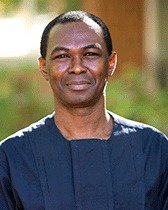















By Olaoluwa Mimiola
We stand at the edge of history’s most consequential technological pivot. The debate over artificial intelligence—often framed as an existential race to set guardrails, prevent disaster, and mitigate algorithmic harm—is as important as it is urgent. Yet, equitably focusing solely on constraint blinds us to an equally critical frontier: distributing the immense upsides of the AI revolution.
For decades, the standard engines of global commerce and technological advancement have left the world’s most vulnerable populations behind. While enterprise valuations soar in Silicon Valley and Shenzhen, localised humanitarian crises in regions like Sudan, Gaza, Ukraine, Afghanistan, and South Sudan unfold against a backdrop of historic underfunding. Official development assistance (ODA) funds from Organisation for Economic Co-operation and Development (OECD) countries dropped by a staggering 23.1% in 2025, creating a profound structural vacuum.
Into this imbalance steps the artificial intelligence revolution. AI stands to generate unprecedented resources—capital, computational efficiency, real-time predictive analytics, and cognitive freedom. But the central question of our era remains: Who actually benefits from this revolution? Will it entrench global divides and flatten human agency through uncritical surrender, or can we harness it as a real equaliser for humanity?
1. The Macro-Economic Landscape: Minting Fortunes and Reshaping Philanthropy
Every major technological paradigm shift redistributes wealth, and AI is no exception. This wave is minting a new generation of tech billionaires and multi-millionaires at a pace that outpaces both the dot-com boom and the Industrial Revolution. This unprecedented accumulation of private wealth brings a profound moral test: the emergence of a new class of global philanthropists.
Etymologically, philanthropy stems from the Ancient Greek philanthropia, meaning “love of humanity.” Yet, modern giving is undergoing its own intellectual evolution through effective altruism—the philosophy that charitable capital should be deployed through rigorous evidence, mathematical calculation, and cost-effectiveness frameworks rather than mere intuition.
The philanthropic landscape reveals a stark paradox: roughly 94% of American philanthropy remains domestically focused, even as the rest of the world faces the most acute needs. The 20 countries at greatest humanitarian risk, as ranked annually by the International Rescue Committee (IRC) Emergency Watchlist, represent just 12% of the global population yet account for 90% of those in humanitarian need. Children born in these crisis zones face harrowing realities, being three times more likely to die before their fifth birthday and ten times more likely to grow up in extreme poverty than children born elsewhere.
Historically, geographical distance has bred donor hesitation. Today, however, data infrastructure dissolves those barriers. Organisations operating on the front lines of global crises—such as the International Rescue Committee (IRC)—have conducted over 50 impact evaluations and 500 cost analyses since 2020. These metrics prove that humanity’s deepest challenges can be solved at remarkably low costs:
Vaccination at Scale: Delivering 40 million vaccine doses in fragile states like Somalia, South Sudan, and Yemen at just $2 per shot, securing lifelong health protection.
Malnutrition Interventions: Empowering local health workers to treat acute childhood malnutrition directly within communities, achieving a 92% recovery rate while boosting cost-effectiveness by 20%.
Anticipatory Climate Action: Deploying proactive financial relief ahead of climate disasters in places like Afghanistan, leaving vulnerable populations 3 times less likely to fall into deeper poverty.
The same generative architectures and predictive algorithms that generate fortunes in metropolitan tech hubs can—and must—close this humanitarian gap. Technologies like the IRC’s global digital helpdesk, Signpost, have already reached 20 million displaced individuals across 12 languages, proving that digital transformation is most powerful when directed toward humanity’s most marginalised.
2. The Micro-Level Realities: Cognitive Offloading vs. Cognitive Surrender
While macro-level systems struggle to distribute aid, screens worldwide are quietly re-engineering individual lives. AI now fills roles once reserved for trusted human confidants: tutor, therapist, creative partner, and editor.
Unlike static tools of the past—such as calculators for computation or maps for navigation—AI actively participates in our cognitive lives. It offers endless patience, persuasive tone, and immediate synthesis, demanding nothing in return except our attention and data. This introduces what researchers term a structural asymmetry.
“It’s starting to creep into the things we thought were cognitively ours.” — Evan Risko, Professor of Cognitive Psychology, University of Waterloo
The Two-Edged Sword of Intellectual Reliance
In comprehensive empirical observations published by Anthropic analysing over 80,000 professional responses, a striking tension emerged between leveraging AI for accelerated learning and risking systemic skill degradation:
High-Stakes Professionals: Lawyers, financial analysts, and healthcare workers report the highest realisation of decision-making benefits from AI assistance. Yet nearly half of surveyed lawyers report encountering AI unreliability and hallucinations firsthand.
The Education Sector: Students, teachers, and academics report immense productivity gains alongside acute anxiety regarding cognitive atrophy. Conversely, tradespeople note high learning utility with virtually zero atrophy concerns.
The Timing Paradox: Research conducted jointly by scholars at the University of Chicago and the University of Toronto reveals that introducing AI early in a complex document-analysis task—when individuals have sufficient time to think independently—degrades performance, narrows critical thinking prematurely, and anchors human judgement to initial algorithmic framing. Conversely, utilising AI late in the workflow (after deep independent ideation) fosters robust engagement with opposing perspectives.
When human operators accept synthetic outputs without active scrutiny, they cross the threshold into cognitive surrender. As Steven Shaw of the University of Pennsylvania notes, “There are things in life that have no right answer—things we can only decide for ourselves. If you’re not making those decisions yourself, who are you?”
3. Sector-by-Sector Analysis: Who Wins and Who Loses?
To map out who benefits from the AI revolution, we must examine its multi-industry footprint through an analytical sector-by-sector lens.
In the education and academia sector, immediate beneficiaries include students seeking personalised tutoring and educational institutions scaling content delivery. However, the primary risks involve the erosion of foundational skill sets and the loss of original composition and metacognitive friction. The long-term outlook points toward a fundamental shift where evaluators assess the underlying process and reasoning rather than final static outputs.
Within healthcare and diagnostics, radiologists and clinicians processing high-volume medical imaging and genomic data reap immense efficiency gains. Yet, dangers persist regarding over-reliance on probabilistic black-box models and liability ambiguities during misdiagnoses. The future envisions collaborative diagnostics where AI handles complex pattern matching while human practitioners focus on empathy, bedside manner, and ethical care delivery.
The legal and public policy sectors benefit through legal researchers swiftly parsing massive contract repositories and extensive case law. At the same time, risks include amplified hallucinations and widening opportunity gaps for junior associates who miss out on foundational manual case work. Long-term practice will be successfully reimagined around strategy, client negotiation, and ethical advocacy.
Finally, humanitarian organisations and NGOs operating in fragile states benefit enormously from predictive analytics designed for famine and drought mitigation. The persistent risks here involve bureaucratic inertia and entrenched data silos between climate and humanitarian agencies. Over the long term, real-time predictive resource allocation is poised to replace reactive emergency responses entirely.
4. The Expertise Paradox and the Future of Human Agency
A recurring corporate narrative suggests that while AI will author code, draft reports, and analyse data, human managers will remain vital to orchestrate the systems. But as Zana Buçinca, incoming assistant professor at MIT, points out, this logic contains a fundamental flaw: the expertise paradox.
Expertise is forged through effortful engagement, trial, and error. If generative tools consistently provide instant shortcuts around cognitive effort, we systematically dismantle the pipeline that produces qualified experts in the first place. Relying on the assumption that competent human experts will always be available to supervise autonomous systems ignores the reality that uncritical delegation destroys the very faculties required for oversight.
However, cognitive pessimism is not destiny. Sam Gilbert, a cognitive researcher at University College London (UCL), cautions against alarmism, noting that similar public anxieties accompanied the rise of search engines and television. While technology alters our incentives to memorise or calculate, basic human cognitive architecture remains remarkably resilient.
Toward Mutual Amplification
The path forward relies on cultivating advanced metacognitive skills—knowing precisely when to delegate to an algorithm and when to engage in the rigorous, uncomfortable labour of independent thought.
Cognitive philosopher Andy Clark proposes a hopeful vision of mutual amplification, where human prompts refine machine output, which in turn sparks deeper human inquiry in a virtuous cycle. Rather than viewing AI as an external dumping ground for mental fatigue, Clark argues that humans are tool-users evolving into collective intelligences.
Conclusion: Claiming Our Stake in the Intelligent Future
Who will ultimately benefit from the AI revolution? The answer depends entirely on our collective intentionality.
If we allow market forces alone to dictate deployment, AI will concentrate wealth among tech conglomerates, degrade human agency through uncritical surrender, and leave the world’s most fragile populations stranded behind digital walls.
Yet, if we intentionally direct this revolution—channelling its immense computational and financial windfalls toward global humanitarian crises, embedding friction into education to protect human reasoning, and treating AI not as a substitute for thought, but as a catalyst for collective wisdom—we can build a future defined by equity. The ultimate test of the AI era is not simply how much wealth or computational power it generates, but where and for whom those resources are deployed.
References & Authorities
International Rescue Committee (IRC).Emergency Watchlist 2025–2026 Reports & Impact Evaluations. New York: IRC Humanitarian Data Initiative.
Organisation for Economic Co-operation and Development (OECD).Official Development Assistance (ODA) Annual Aggregate Drop Analysis. Paris: OECD Publishing.
Anthropic Economic Research.Large-Scale Empirical Study on Generative AI Utility, Cognitive Reliance, and Professional Impact. San Francisco: Anthropic Labs.
Risko, Evan, & Gilbert, Sam.Cognitive Offloading, Extended Minds, and the Incentive-Capacity Distinction in Digital Environments. Journal of Cognitive Science and Philosophy.
Buçinca, Zana, et al.The Expertise Paradox: Human-AI Interaction and the Erosion of Critical Task Oversight. MIT Human-Computer Interaction Laboratory.
Clark, Andy.Natural-Born Cyborgs: Minds, Technologies, and the Future of Collective Intelligence. Oxford University Press.
Shaw, Steven.Cognitive Surrender and Structured Task Delegation in Automated Workflows. University of Pennsylvania Graduate School of Education.
*Olaoluwa Mimiola is a highly experienced and merit award-winning journalist, media, and public relations expert with over 20 years of experience.