










By Lanre Ogundipe
Political analysis in Nigeria often reduces power to moments—elections won, offices occupied, alliances struck. Victory is explained through campaign strategy; defeat through miscalculation. What is frequently overlooked is the deeper architecture beneath these outcomes: how power is constructed, stabilised and extended over time.
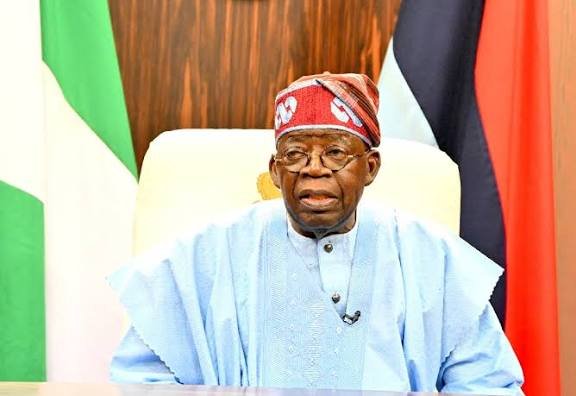
This is where the political trajectory of President Bola Ahmed Tinubu requires a more rigorous examination. To understand his durability, one must move beyond episodic politics and examine method. Tinubu does not approach power as an event to be won and relinquished. He approaches it as a system—built incrementally, reinforced continuously and designed to reproduce itself across political cycles. What emerges from this approach is not merely influence, but an operational political engine.
The defining characteristic of this engine is that it is not dependent on formal office. Tinubu’s most consequential expansion of influence occurred after leaving the Lagos governorship in 2007. Yet rather than recede, his political reach deepened. This indicates that his power is not positional; it is structural.
The first component of this structure is network formation. Tinubu’s politics is anchored in layered relationships that extend beyond immediate electoral needs. These networks cut across political actors, bureaucratic elites, private sector interests and regional blocs. Crucially, they are not assembled for single contests. They are cultivated, maintained and activated over time.
This transforms politics from transaction into system.
Within such a system, influence is distributed rather than centralised. Individuals within the network occupy different offices—governors, ministers, legislators—but remain connected through shared political memory and reciprocal obligation. This creates continuity that outlives electoral cycles. Power, in this sense, becomes portable.
The second component is structured delegation.
Tinubu’s governance legacy in Lagos offers a concrete illustration. The emergence of successors such as Babatunde Fashola and Akinwunmi Ambode was not incidental. It reflected a deliberate process of political recruitment and administrative grooming.
Delegation here is not passive. It is strategic.
Authority is extended, but within an aligned framework. This produces a dual effect: it enables governance continuity while preserving strategic influence. Unlike systems where successors dismantle predecessors’ structures, this model encourages institutional layering—each administration builds upon an existing foundation.
However, this approach is not without tension. Delegated authority can generate friction, particularly when autonomy expands beyond alignment. The Ambode episode, for instance, revealed the limits of deviation within a tightly structured political system. This highlights an inherent feature of the model: continuity is prioritised over divergence.
The third component is temporal depth—long-term political memory.
Tinubu’s political engagements demonstrate a consistent pattern of delayed gratification. Alliances are not evaluated solely on immediate returns. Relationships are sustained even when inactive, creating a reservoir of political capital that can be activated when conditions shift.
This introduces a cumulative advantage.
It explains how Tinubu navigated multiple political environments—from opposition consolidation in the early Fourth Republic to national coalition-building that contributed to the 2015 political realignment. Each phase did not replace the previous one; it extended it.
In this sense, time becomes a strategic asset.
The fourth component is coalition-building as infrastructure.
In Nigerian politics, coalitions are often transactional—assembled for elections and dissolved thereafter. Tinubu’s approach appears more structural. Coalitions are built with an eye toward durability. Interests are negotiated, not merely aggregated. This was evident in the formation of broad alliances that eventually altered the national political landscape.
Coalition, therefore, is not an event. It is a system. It requires continuous calibration — balancing regional interests, managing elite expectations and maintaining internal cohesion. This demands a level of political intelligence that goes beyond electoral arithmetic into institutional navigation.
The fifth and most complex component is institutional engagement.
Tinubu’s method does not reject institutions; it operates through them. Political parties, legislative bodies and executive structures are treated as arenas of influence rather than obstacles. This distinguishes an insider strategist from an outsider disruptor.
Yet this introduces a critical analytical tension.
The same system that enables coordination and continuity can raise concerns about concentration of influence. When networks become deeply embedded within institutional structures, questions arise about internal democracy, competitive openness and the boundaries between organisation and dominance.
This tension is central to understanding Tinubu’s political model. It is neither purely consolidative nor purely pluralistic. It exists in a space where efficiency and control intersect. This duality explains both its effectiveness and the criticism it attracts.
To fully situate this model, a comparative perspective is instructive.
The politics of Obafemi Awolowo was anchored in ideological clarity and programmatic discipline. Olusegun Obasanjo exercised authority through institutional command shaped by military and civilian experience. Muhammadu Buhari drew strength from personal integrity and moral positioning.
Tinubu represents a different configuration.
His politics is best understood as networked power architecture—a system where influence is constructed through relationships, sustained through delegation and extended through coalition. It is less ideological than Awolowo’s, less command-driven than Obasanjo’s, and less personality-centric than Buhari’s. It is adaptive, layered and resilient.
This resilience explains his endurance.
He does not rely on a single legitimacy source. His influence is not anchored solely in office, ideology or personal appeal. It is distributed across a system capable of absorbing shocks and adjusting to new realities.
But this brings us to the central question that now defines his presidency.
Can a political engine designed for acquisition and consolidation of power be effectively translated into a mechanism for national transformation?
The demands of governance differ fundamentally from those of political organisation. Building alliances is not equivalent to reforming institutions. Sustaining networks is not the same as delivering inclusive economic outcomes. Political stability does not automatically translate into developmental progress.
This is the transition currently under scrutiny.
At the national level, the Tinubu model faces new variables: a more complex economic environment
heightened public expectations
institutional fragilities beyond sub-national control and a broader, more diverse stakeholder landscape.
The qualities that enabled political success—flexibility, negotiation, coalition management—must now interact with policy execution, economic reform and administrative discipline.
This is not a simple extension of previous success. It is a transformation test.
Power, as constructed through networks and strategy, can secure access. It can sustain relevance. It can even reproduce itself across generations of political actors. But history imposes a different metric. It asks what that power produced. Did it strengthen institutions or personalise them? Did it expand opportunity or concentrate access? Did it deliver stability alone, or progress as well?
For Bola Ahmed Tinubu, this is no longer a theoretical question. It is the defining challenge of his current phase.
The engine of power has been built.
The question now is whether it can drive transformation.
•Lanre Ogundipe, a Public Affairs Analyst, former President, Nigeria and Africa Union of Journalists, writes from Abuja.