












A suspected outbreak of hantavirus has claimed the lives of at least three passengers aboard a luxury expedition cruise ship stranded off the coast of Cape Verde, sparking an international health response.
The vessel, identified as the MV Hondius and operated by Oceanwide Expeditions, was carrying roughly 150 passengers and crew from more than 20 countries when the illness began spreading. According to the World Health Organization (WHO), at least seven cases have been recorded so far, including two laboratory-confirmed infections and several suspected ones.
The outbreak unfolded over several weeks, beginning with the unexplained death of a Dutch passenger in April.
His spouse later died after falling ill, followed by a third fatality involving a German national. A British passenger remains critically ill in South Africa, while others onboard have shown symptoms ranging from mild to severe.
Authorities in Cape Verde denied the ship permission to dock due to public health concerns, leaving it anchored offshore as medical teams coordinate evacuations and containment measures.
Passengers have been confined to their cabins, and strict hygiene protocols have been enforced to limit further spread.
Health officials say the overall risk to the general public remains low, but investigations are ongoing to determine how the virus was introduced onboard. Early suspicions point to exposure linked to rodents, which are known carriers of hantavirus.
🦠 What is Hantavirus?
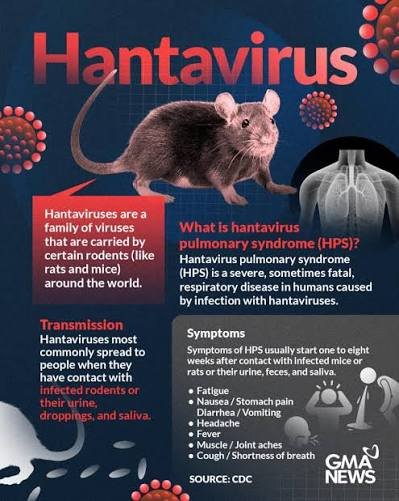
Hantavirus is a rare but potentially deadly virus that humans usually contract through contact with infected rodents—especially their urine, droppings, or saliva.
It is not commonly spread between people, although rare exceptions have been recorded with certain strains.
Hantavirus infections often start like the flu but can quickly become severe:
Early symptoms: fever, fatigue, muscle aches, headaches
Later symptoms: difficulty breathing, coughing, chest tightness
In some cases: kidney complications or severe lung disease
The disease can progress rapidly and may become life-threatening if not treated promptly.
🧬 Why It’s Dangerous
Hantavirus can cause Hantavirus Pulmonary Syndrome (HPS), a serious condition affecting the lungs and heart
Fatality rates can be high—up to about 40% in severe cases
There is no widely available vaccine, so prevention is key
🛡️ How to Prevent Infection
Health experts recommend:
Avoid contact with rodents and their droppings
Keep living spaces clean and well-ventilated
Use protective gear when cleaning areas with possible rodent activity
Seek medical help immediately if symptoms appear after exposure
The cruise ship outbreak highlights how quickly infectious diseases can emerge in confined environments. While hantavirus remains rare, its severity and high fatality rate make early detection and prevention critically important.

Hantavirus explained: Virus behind three deaths on cruise ship Off Cape Verde

Related Posts








Don't Miss




Stay informed with Breaking News Online in Nigeria on The News Bearer. Get real-time updates and analysis of national, international events.