









The woman who tested positive for Ebola in Nigeria is the wife of a Swiss diplomat based in Abuja, Switzerland’s government has confirmed.
The Swiss Federal Department of Foreign Affairs said the woman, a 42-year-old Ugandan-born Swiss national, was believed to have contracted the virus while travelling in Uganda about two weeks ago, Reuters reported.
The patient tested positive for Ebola on October 20, in what Nigerian authorities described as the country’s first confirmed case of the disease in more than a decade.
According to the Swiss government, the woman had been receiving treatment at a private clinic in Abuja for about a week after developing symptoms.
Her husband, who accompanied her on the trip, has been placed in isolation but has not developed any symptoms, the ministry said.
The Swiss authorities added that the couple did not travel to the Democratic Republic of the Congo, where the current Ebola outbreak was first detected.
The clarification contradicts earlier claims by Ugandan authorities that the woman had travelled to eastern DR Congo for business before transiting through Uganda.
However, the World Health Organisation and the Africa Centres for Disease Control and Prevention said investigations were ongoing to establish where the woman contracted the virus.
Health officials are also investigating whether she may have crossed paths with Kenya’s first confirmed Ebola patient, who also travelled through Uganda’s Entebbe International Airport on October 3.
The Africa CDC said the possibility of contact between the two travellers was one of the scenarios being examined, although no link has been established.
Nigeria has intensified contact tracing and other containment measures following confirmation of the imported case, as health authorities work to prevent further transmission.
The current outbreak has affected several African countries, including the DR Congo, Uganda, Kenya and Nigeria, raising concerns about the cross-border spread of the virus.
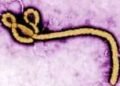
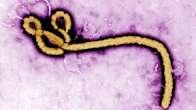
Ebola is a serious viral disease transmitted through direct contact with the blood or other bodily fluids of an infected person, or contaminated materials.
Health authorities say early detection, isolation and contact tracing are critical to controlling its spread.