












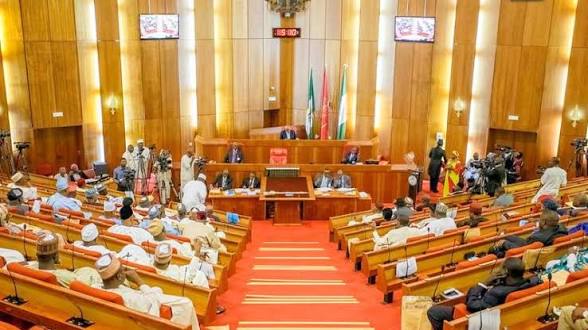
Abuja, Nigeria – The Senate on Wednesday passed the State Police Bill, marking a major step toward decentralising policing and strengthening security across the country.
The legislation seeks to establish state police forces alongside the existing federal police structure, a move widely regarded as one of the most significant security reforms in recent years.
Under the proposed law, state governors will be empowered to appoint State Commissioners of Police on the advice of the Nigeria Police Council, subject to confirmation by their respective State Houses of Assembly.
Governors will also be authorised to issue lawful directives to the commissioners on matters relating to public safety and the maintenance of law and order.
The bill, which amends key sections of the 1999 Constitution, provides for the creation of both Federal Police and State Police. It also moves policing from the Exclusive Legislative List to the Concurrent Legislative List, allowing states to establish and operate their own police services in line with nationally prescribed standards.
To prevent abuse of power, the legislation stipulates that where a commissioner considers a governor’s directive unlawful or inconsistent with professional policing standards, the matter may be referred to the Nigeria Police Council, whose decision will be final.
Supporters of the bill argue that state policing will improve intelligence gathering, enhance community-based security operations and reduce pressure on the overstretched federal police force.
They contend that local officers are better positioned to understand the languages, cultures and security dynamics of their communities.
However, concerns remain over the possibility of political interference by state governments.
Critics have warned that state police could be misused by governors against political opponents, although proponents insist that oversight mechanisms built into the bill will safeguard against such abuses.
Before the proposal can become law, it must secure approval from at least two-thirds of the 36 State Houses of Assembly and receive presidential assent.

Senate Passes State Police Bill, Empowers Governors to Appoint Commissioners

Related Posts









Don't Miss




Stay informed with Breaking News Online in Nigeria on The News Bearer. Get real-time updates and analysis of national, international events.